I thought I would write about connections and traits of strong women by using books in my library. The girls in my life could use them as role models-maybe even read the books. My daughter told me to look into, and write about some newer books, books that one could buy on Amazon or in a new bookstore. She felt I focus on antiquarian books too much. This is the daughter I am considering going out of retirement for; To begin a full time project for; The girl that I cannot say no to.
So…for my forever little girl, I will start with “Rebel Girl” by Kathleen Hanna, published in 2024.
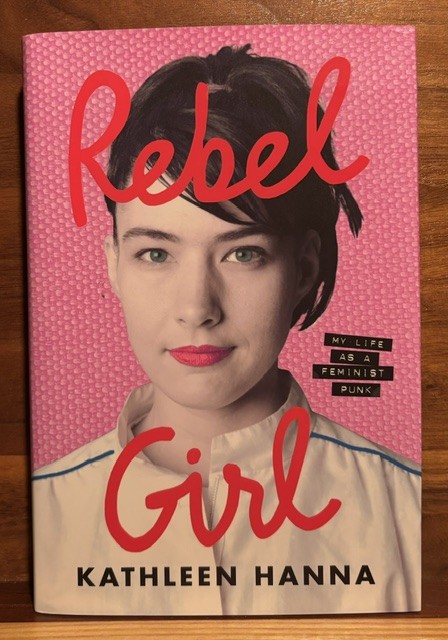
Kathleen Hanna was the lead singer for a punk band Bikini Kill, along with being a main advocate for Riot Grrrl, a punk movement and zine she contributed to, that first printed the term “Girl Power”. Hanna wrote this autobiography. I had asked my 19 year old granddaughter where the term “Girl Power” came from, thinking she would probably say The Spice Girls. She confidently replied, “Riot Grrrl, and Bikini Kill.” I then tracked down this book. She wants to read it, too!
I then have “A Lady’s Life in the Rocky Mountains” by Isabella L. Bird, published 2025 (This edition.) The original was published in 1879.
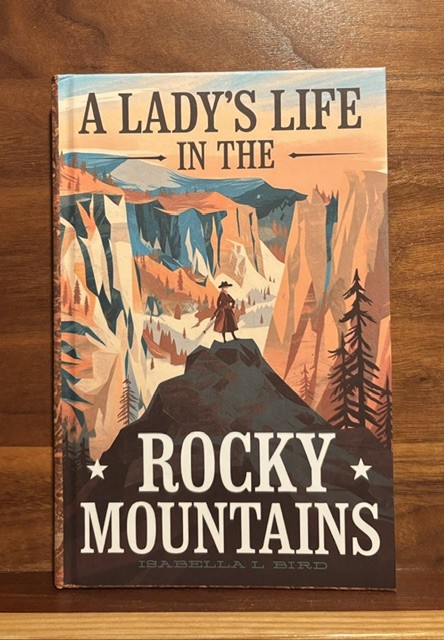
Isabella L. Bird was born in England in 1831, and died in 1904. She was sickly in her youth, and doctors recommended that she spend more time outdoors. Her father, a minister, had the funds to send her traveling. Outdoor living improved Bird’s health dramatically. She made trips first around Europe, and then more exotic places including Asia and America. She wrote about her travels. Her most popular book was her trip to Colorado, in the 1870’s. This book is a copy of those journals she sent to her sister.
I then have “The Discovery of Jeanne Baret” by Glynis Ridley, published in 2010.
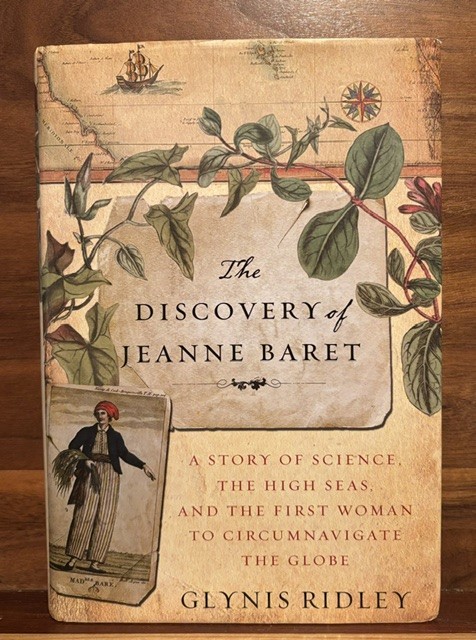
Jeanne Baret was another woman explorer, in an even earlier age. She was born in France in 1740, and died in 1807. In her youth, she became very proficient in botany. She was later tutored under the French naturalist Philibert Commerson, and they eventually married. Commerson was asked by the French government to travel on the ship Étoile as head botanist, to travel around the world documenting, and bringing back new varieties of plant life. He had Jeanne dress up as a man, and smuggled her on board.
Together they collected over 6,000 plant samples to be taken back to France. After almost two years traveling on this world-wide trip, Baret was discovered to be a women. Commerson and Baret then left the ship, and lived in the island of Mauritius, just east of Africa in the Indian ocean. He died on island several years later. Baret then returned to France, and upon arriving, became the first woman to circumnavigate the world. For many years, Jeanne Baret did not get the credit she deserved for her discoveries and adventures. This is a wonderful biography of her life.
I now move to the book “The Librarian of Auschwitz” by Antonio Iturbe, published in 2017.
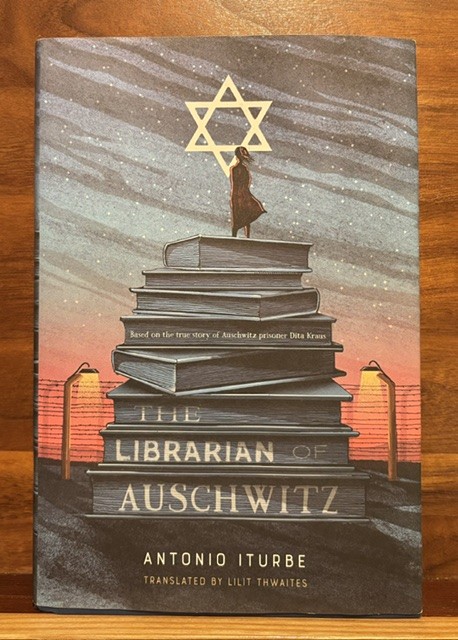
This is a very interesting story, based on the true tale of Dita (Polach) Kraus. Dita was a fourteen year old girl, taken prisoner along with her mother and father. They went to various camps, and ended up in Auschwitz. While living in a children’s block of one concentration camp, Dita hid and smuggled eight books to various other children to read. She survived the camps, and after the war, Dita married Otto Kraus, whom she had met in Auschwitz. Dita Kraus died in 2025, 96 years old.
(I just found out that Dita Krauz had written her own book about her time in concentration camps, that was published in 2020, “A Delayed Life: The True Story of the Librarian of Auschwitz.” I have ordered it, hoping to have it by the end of the month.)
Lastly, “Clara’s Grand Tour” also written by Glynis Ridley, published in 2005.
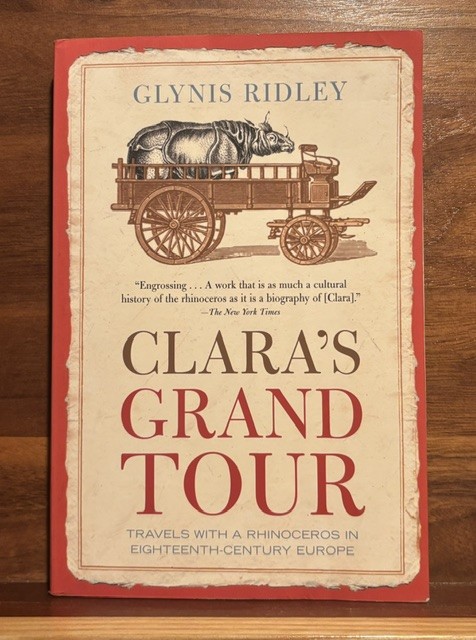
This factual, funny book is about Clara, a female Indian Rhinoceros. Her owner, Captain Douwe Mout van der Meer brought her from Assam to Europe in 1741. He spent the next 17 years traveling from city to city, country to country showing off Clara. She grew to over three tons, and had a special carriage to haul her around in.
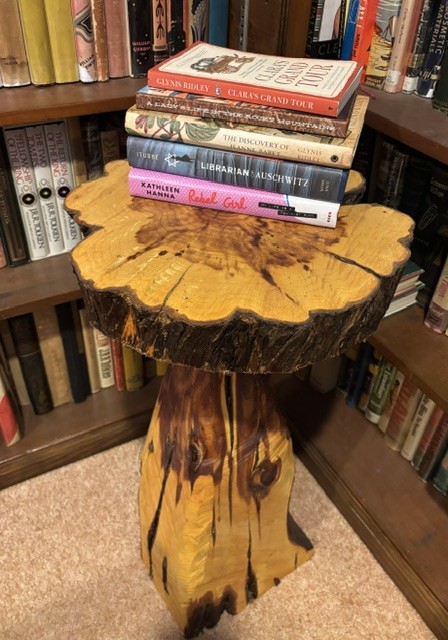
These books, all about women, are now sitting on a red cedar table that my son made for me a few years back. They are one of several small piles of books in the library that I have not yet read. I don’t feel bad, this is not hoarding. There is a Japanese term for this type of condition.
Tsundoku (積ん読 ) is the phenomenon of acquiring reading materials but letting them pile up in a home without reading them, meant for reading later. I am told “in Japan, it is often viewed with a sense of gentle acceptance. It represents a promise to one’s future self—a library of potential knowledge waiting for the right moment.”
These books will be enjoyed on some cold winter evenings. Right now, it is comforting to just see them sitting there, waiting for the time to be picked up and read…and I will pick them up.
Thanks for reading.


Best regards, Matt MorrisonMorrison’s Laundry & Cleanerscell (224) 619-9275
LikeLike