We have three events to discuss on July 8th. I have a book for each. I will start with the oldest book/event first.
July 8th is National Raspberry Day. I have an interesting book from Orange Judd Publisher (of farm information). “The Small Fruits Culturist” by Andrew S. Fuller, published 1890. This book goes into the ‘seeds and stems’ of raising Raspberries. Raspberry fruit is a collection of drupes, up to 100 druplets to a berry. Each little druplet holds a seed. They are many colors, and the biggest difference between raspberries and blackberries (besides blackberries usually larger) is that when you pluck a raspberry, the stem stays on the plant, so the berry is now hollow. On a blackberry, the stem stays on the berry.
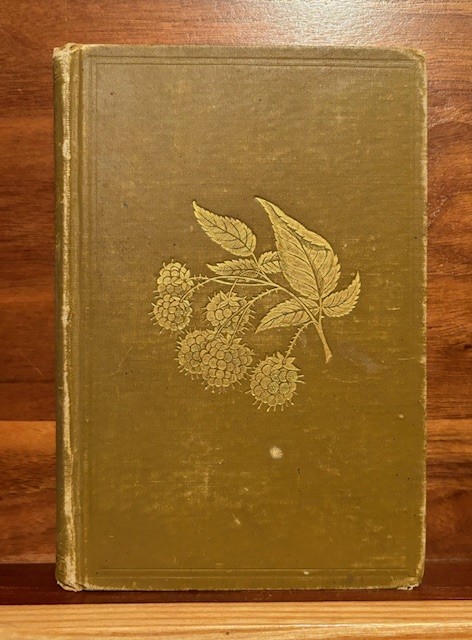
Pliny the Elder wrote of raspberries in his Natural History in the year 45. He considered it a wild bramble. Greeks called them Idaeas. This book goes into great detail in growing the raspberry plants, with many illustrations on roots, cuttings, and suckers. One learns how to train the plants on growth, and what insects to look out for. The Raspberry Borer is a deadly critter, as is the Snowy Tree-cricket.
Even in 1890, there were over 50 varieties of raspberries. They recommended for native varietes for home use for bright red raspberries: Cuthbert and Turner; for yellow, Caroline; for purple or dark red, Reliance and Philadelphia; and for black, Doolittle and Gregg. There are illustrations of most of these different varieties. This was the book you turned to if you were going to grow raspberries, 130 years ago.
Also on July 8th, began “The March West” by the Royal Canadian Mounted Police. In 1874, they left Dufferin, Manitoba to where Bow and Belly Rivers met, 800 miles away, near Southern Alberta. These officers were going to Fort Whoop-up to arrest whiskey traders and destroy their whiskey trade. My book by Landmark books (a favorite collection of books from my boomer childhood) is “Royal Canadian Mounted Police” by Richard L. Neuberger, published 1953, which goes into the episode very well.
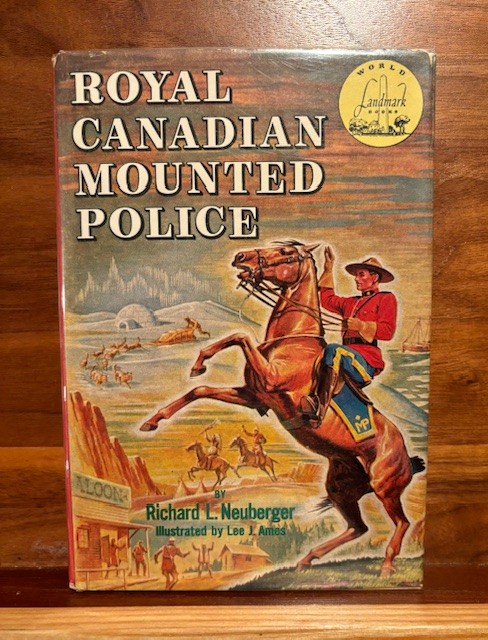
Fort Whoop-up was run by whiskey traders. They would pay Indians a pint of whiskey for each buffalo robe. The traders may get 9000 robes in a season for whiskey that was only cheaply flavored alcohol. Once the Indians were drunk, they would cause much lawlessness around the fort and neighboring towns. The traders were essentially ‘blowing raspberries’ to the Canadian Law, a sound of contempt and ridicule.
Canada put together a force of men, first called Northwest Mounted Police, to control both the whisky traiders, and the Indians. They began their trip on July 8, 1874. In the end, they did wipe out that whiskey trade, and made friends with the Indians. Thus was born The Royal Canadian Mounted Police. On a sidenote, I remember watching The Adventures of Rocky and Bullwinkle Show that had episodes of Dudley Do-Right, a Canadian Mounty; and his nemesis Snidely Whiplash; and his gal Nell Fenwick, along with Horse.
The third event for July 8th is the birthday of J. De La Fontaine (July 8, 1621 to 13 April 1695), a french writer famous for his fables. I have an interesting book “Tales and Novels of J. DeLa Fontaine” published by William Godwin, 1933. Not only are La Fontaine’s works here, but there are wonderful illustrations by Clara Tice.
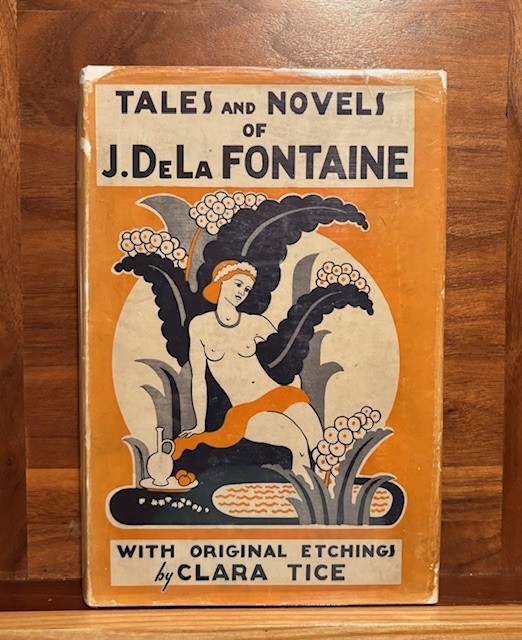
The books published by William Godwin are very collectable, especially with the dust jackets, along with some illustrators like Clara Tice, who is also very much in demand. I have several Godwin books in my library, along with several wonderfully illustrated books from Clara Tice. She and several other illustrators drew provocative artwork in the early 1900’s through the 1930’s.
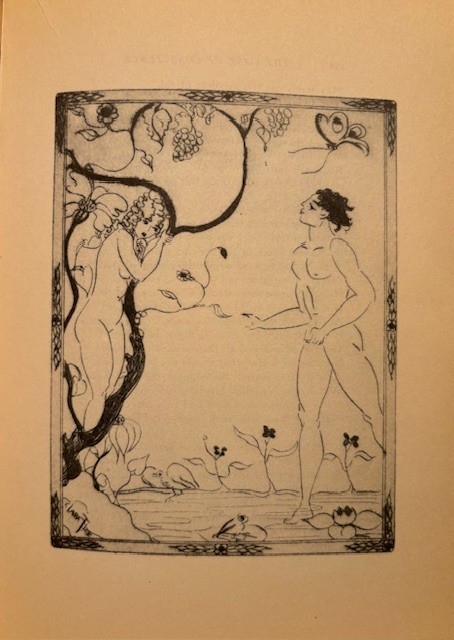
These two Clara Tice drawings are from “Tales and Novels of J. De La Fontaine.” Several others in the book were even more risque.
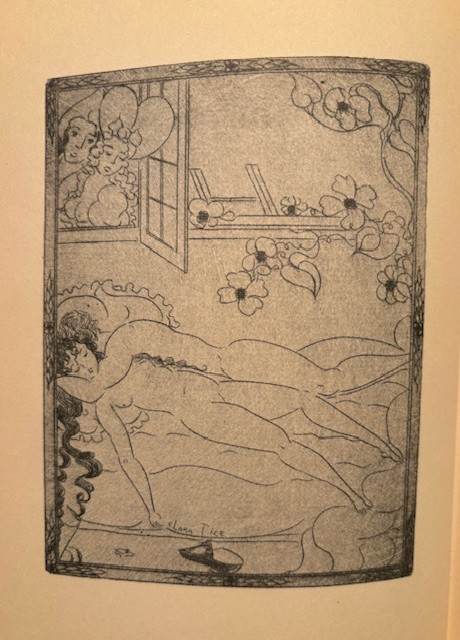
Private publishers like Godwin, Willey, Rarety Press, Phoenix, and others took advantage of these scandalous illustrations when publishing books. They hoped to avoid critics, with private societies to sell just to members. They tried to give a loud vocal raspberry to the police and censors. Because of the illustrations, the dust jackets are very desirable when collecting this style of books. Sometimes you can judge a book by its cover. I have a good selection of various styles and artists, of these books with dust jackets from the time period. Perhaps in the future, I will have an entry of the history of these illustrators and books, and the censorship laws, beginning with Anthony Comstock, Postmaster General in the 1880’s…along with perhaps some illustrations.
Thanks for reading…and looking at pictures.

