Today we are going to zig-zag through the library to honor a few events. These books are all over; Spending a lot of time walking to and fro pulling them together. With my ‘squirrel’ change of focus, I often look at other books, thinking “Oh yea, I remember that” or “Wow, there is that missing book.” Sometimes I just wonder around with a handful of books, and then flop into the Library’s recliner chair, and thumb through, revisiting memories. Today has been one of those days. Heck, I am retired. Who better to enjoy this library.
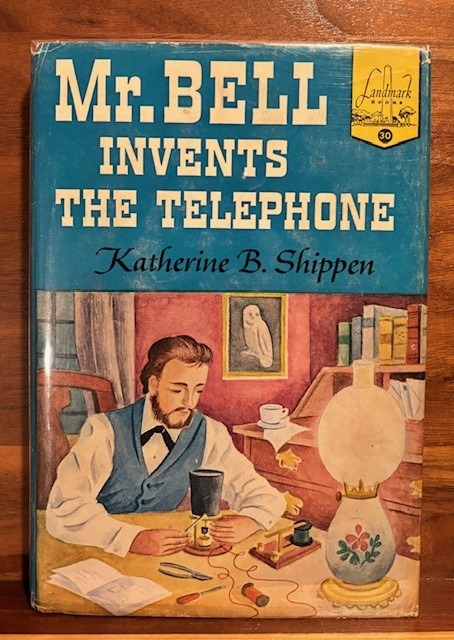
While these books may not seem to have anything in common, they do. They are all affected by today, March third. The first is a birthday-Alexander Graham Bell born March third, 1847. The book is one of my Landmark Books for school kids, that I have in a bookshelf upstairs in the guest bedroom, “Mr Bell Invents the Telephone” by Katherine B. Shippen, 1955. I enjoy Landmark books because they are very narrowly topiced (for one event or famous person), have under 200 pages, are geared for young adults, and can easily be read in one night. They also all have interesting dust jacket artwork. This book quickly explains the life of Mr Bell from being born in Scotland to living in London, to Boston, New York.
The bulk of this book is really the story of events leading to the invention of the telephone. In the last chapter, the Governor of California was on a phone in his office, along with Mr. Bell’s assistant Thomas Watson. The president of the United States, Woodrow Wilson was on a phone in Washington D.C., and an old white haired Mr. Bell was on a phone in New York. All of the phones were crackling. The last words of the book (sorry to spoil it) are “Mr Watson,” he (Mr. Bell) called across the continent. Come here. I want you.”
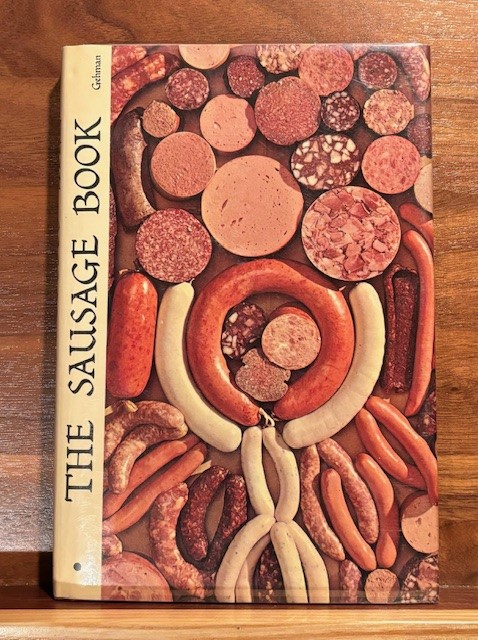
March Third is also National Cold Cuts Day. I walked over to a food section behind my desk to pull out “The Sausage Book” by Richard Gehman, 1969. He states that this “being a compendium of sausage recipes, ways of making and eating sausages, accompanying dishes, and strong waters to be served. Including many recipes from Germany, France, and Lancaster County, Pennsylvania, to and commented to paper.” If you cannot find the right cold cuts sliced from this selection of sausages, you will simply have to give up. There are great stories, sausage making tips, and recipes in this book.
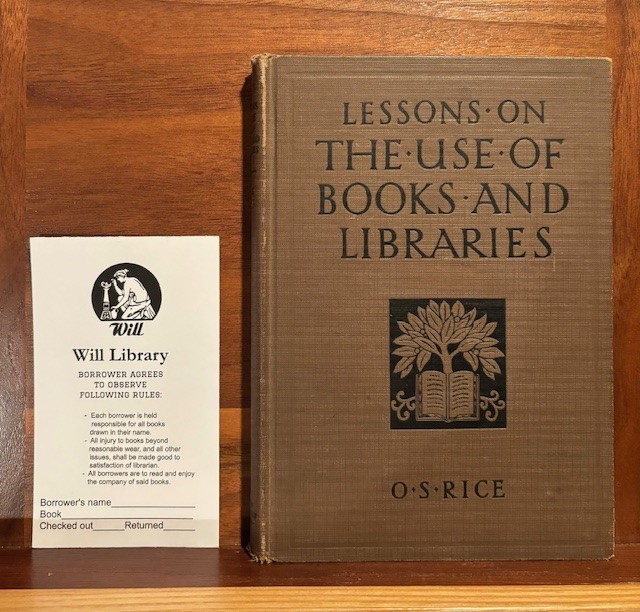
I now move over to the bookshelf that I house books about books (libraries, book making, repairing, collecting) to retrieve “Lessons on the use of Books and Libraries” by O.S. Rice, 1930. This is a great book about how to use the library-with specific locations, like card catalogs, return desks, specialty stacks, children’s areas; And also how to take care of books. There is a great amount of time spent on the anatomy of books, how to handle them, and where to place them. Why do we need this book? Because March third to March ninth is Return Borrowed Books Week.
I also have a copy of the borrower’s card that I have my grandkids use if they are taking a book home with them. They fill out what book, when taking, and when it is coming back. I file it. There are a few rules as to how take care of the book, along with ‘enjoy the company of books.’ I hope to get all books back, but have them fill out the paperwork (printed on 3X5 size notecards) mainly so they sense the importance of treating books gently, and properly. It seems to work.
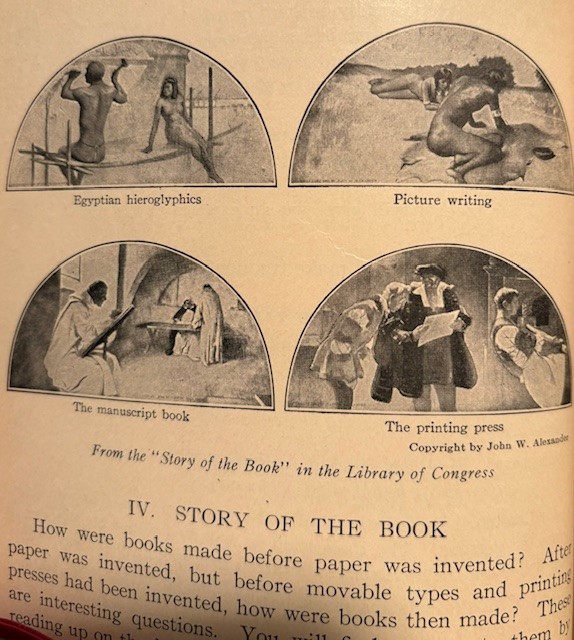
On page 14 in “Lessons on the use of Books and Libraries” there is a section on “The Story of the Book”, explaining different order of the growth of the book. First with Assyrian clay tablets, then rolls of papyrus, then manuscript books, then finally invention of printing press. There is also illustrations for each. Why I wonder, is there a nude woman watching in the first two? This is in the 1930 edition.
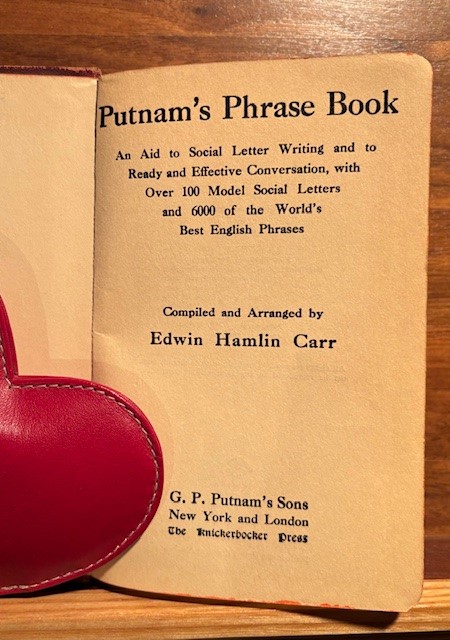
Have you ever said something, or written a letter, or sent an Email (or printed a photo), and then after thinking a bit, said “Oops. That could have been worded differently.” Well, March third to ninth is Words Matter Week. Luckily, I am near the book ‘Putnam’s Phrase Book” by Edwin Hamlin Carr, 1931. As the subtitle states, this is “an aid to social letter writing and to ready and effective conversation with over 100 model social letters and 6000 of the world’s best English phrases.” This is a handy book that is part thesaurus, part dictionary for not just words but also phrases. There is selections on how to make ones tone angry, or gracious, or forceful (WITHOUT JUST USING ALL CAPS). There is a chapter with dozens of letters, forms if you wish, to make your ideas written more effectively, and after using for a while, to clearly verbalise your thought. It is also well indexed. This book has been extensively used in its life, sitting on a desk somewhere, always within reach.
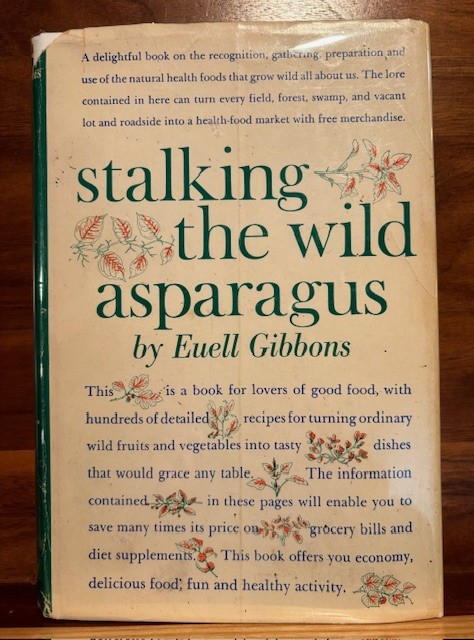
March third is also World Wildlife Day-to celebrate wild animals and plants. So I will walk over to my camping and nature bookcase over in the annex room, and pick up “Stalking The wild Asparagus” by Euell Gibbons, 1962. Euell Gibbons explains how to ‘hunt’ flowers, roots, berries, leaves, even a frog and crayfish for food. He was well trained in wildlife, and what is edible or not. He was also conservative in his harvesting, only taking what he needed so not destroying the environment.
OK, that may have been stretching World Wildlife Day by using the plants found in backyard or close field and woods. I should have listened more to Words Matter Week. Let me try again, by going over to the main library, and the bookshelf of exploring, to pull out “The Amazon and Its Wonders, illustrations of animal and vegetable life in the Amazonian Forest”, by W.H.Davenport, 1894.
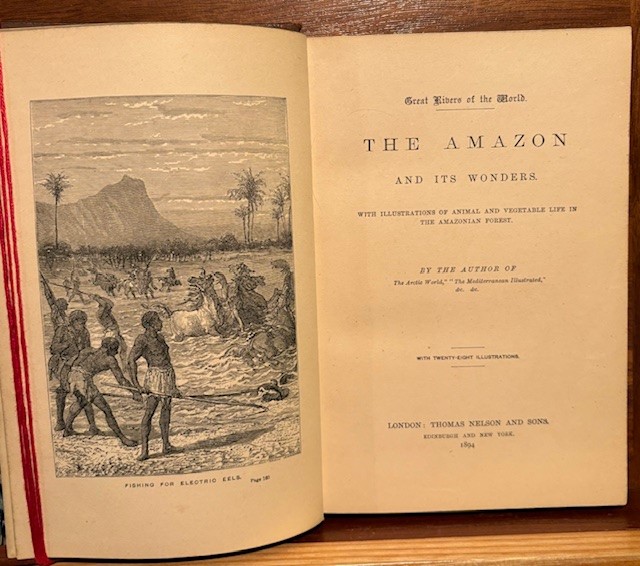
This book is a wonderful book to read and hold. First it is a smooth leather bound book, and very comfortable in the hand. Second, it has plenty of illustrations and great stories of animals and plantlife you will find in the wild jungles surrounding the Amazon river. The first illustration shown are of natives hunting electric eels. World Wildlife Day wants us to be aware of nature so that we do not eliminate, or push animals or plants to extinction. To that end, I will add one more book by first going over to the children’s section of the library to get it.
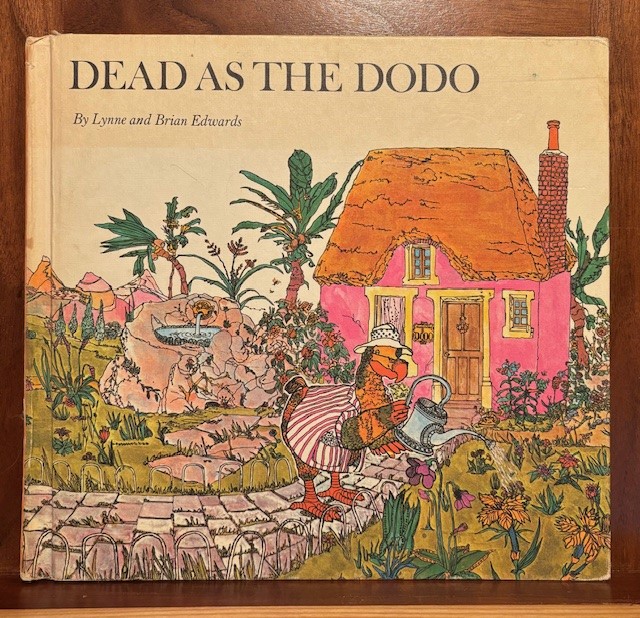
I pull up ” Dead as the Dodo” by Lynne and Brian Edwards, 1973. This is a wonderful story about a Dodo bird Josephus E. Dodo, sitting on an island, and reading that dodos are extinct. He travels to England to explain to the British government that he is indeed alive. They put him through tests to try and prove otherwise. They were going to throw him off of Big Ben to show that he would splatt, as true Dodo birds cannot fly. He ended up flying away, because the government was going to cause Dodo birds to become extinct all over again.
Thank you for experiencing March third with me. I clicked my 1000 steps in the library, tracking down the books, and then putting them on the bookstand for pictures before writing this little sketch.
Keep reading.

