Today I cut the grass on my lawn. It is one of the duties of home ownership. One might think that mowing one’s yard has nothing to the library. Ahhh, but it may. Let me continue.
A few weeks past, my mower was causing some problems-stopping right after I had started it. I pulled out from the small library of books in my garage, the Chilton’s guide for small engines.
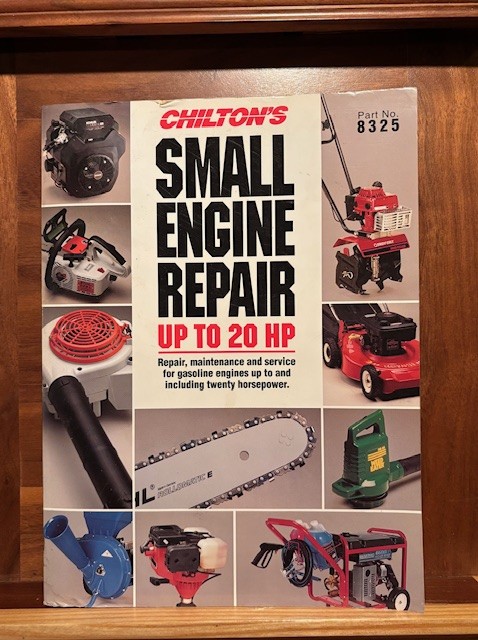
It was a simple fix. I took apart the carburetor, cleaned it and the gas float. After adding some premium gas, the mower then ran like a champ. I have a series of Chilton guides (or perhaps sometimes a Haynes guide) for every car or vehicle I have owned for the last 25-30 years. It is good to have visual help when trying to fix issues yourself. If I cannot figure it out, my son, who has a fantastic mechanical aptitude, can repair most anything.
Also in the garage, I keep a first aid book. It reminds me first, to be careful. Second, to not panic if get injured. Staying calm is so important in a crisis. And… you never know when something may happen.
As I began mowing in my back yard, I came across some clover. It is first time I have seen clover in my grass. It is probably because of geese in my back yard. They eat a lot of vegetation, and then they poop a lot. Those geese are common in the spring and fall.

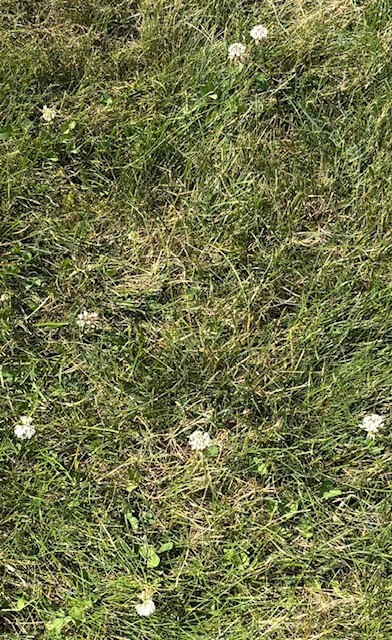
Back when I was growing up, there was tons of clover in our yard. Bees love clover. I remember once stepping on a bee when running around barefoot. I got stung. It hurt, but not as bad as when my brother got stung by wasps that had made a nest in the hose reel that was attached to the house. He was turning on the water, and multiple wasps got him.
While I no longer run around barefoot in the yard anymore (remember all of those geese), I didn’t want to have the clover in my yard. So, I checked my Ortho book.
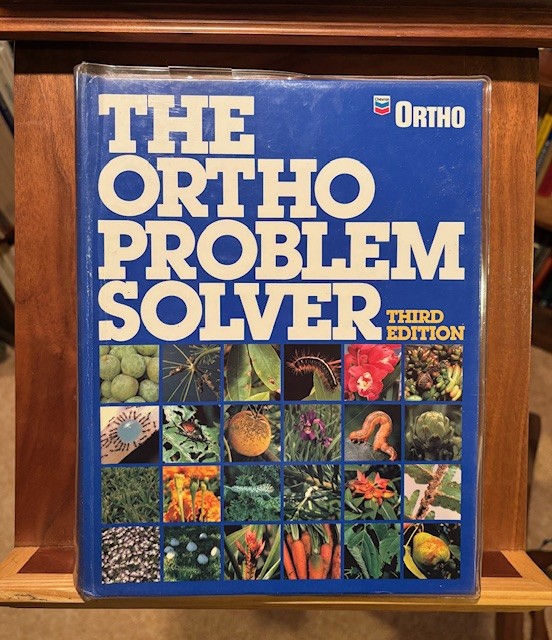
I could use Weed-B-gon or Weedkill for clover. I live on a small community lake, and do not want run-off chemicals entering the lake, so decided it is better to just dig out the clover. It was also recommended to keep the height of my lawn a little longer-over 3 inches, to help choke out the clover.
I have a book “Keeping the Plants You pick”, by Laura Louise Foster, published 1970. It shows various ways to preserve flowers.
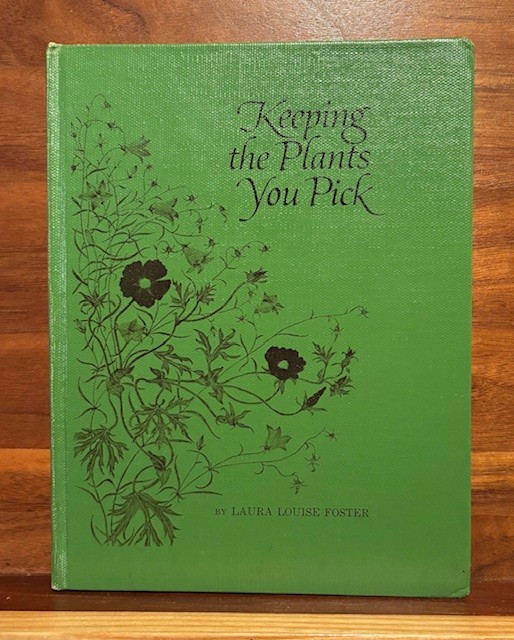
Clover is mentioned several times, whether drying small bouquets, or pressing tiny flowers. I think I will make a few bookmarks with both the fuzzy bloom, and the leaves. I pulled some to press in an old book.
As I went back to mowing, I startled a moth in the grass, kicked up into flight from the noise of my mower. Out of nowhere, a bird swooped down and caught the moth in midflight. The bird stayed around for about 20 minutes, catching and eating every moth that was forced into flying from my mowing. The bird seemed to know I would send moths into the air. When I was done with the yardwork, I went to my standby bird book used in eighth grade: “Birds-A Guide to the Most Familiar American Birds” by Golden Press, 1956.
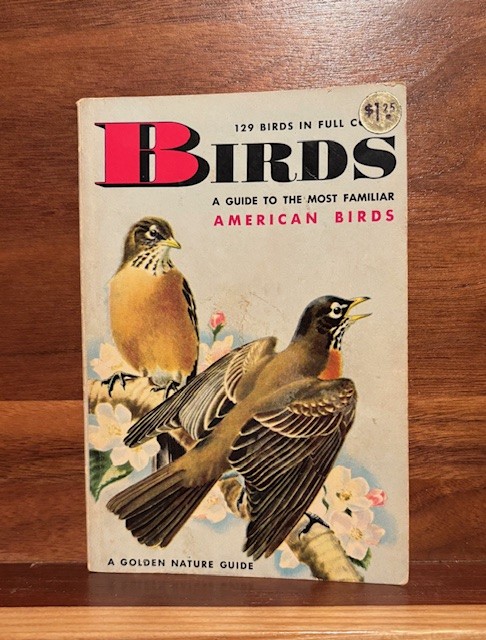
Using the book, I figured my moth-catching bird to be a Tree Swallow. It is a beautiful bird, white on bottom, and blueish to black on back and top of head. The tail feathers do not have as pronounced a “V” shape as the Barn Swallow. I also looked up the Tree Swallow in my recent acquisition: “The Birds of America” by John James Audubon.

I found my bird on plate 100. Audubon called it the White Bellied Swallow. I hope my Tree Swallow stays around for a few more mowings. It seems they stay here for the summers and then migrate to Mexico or Florida for the winter.
My last book today was my dad’s: “Outdoorsman’s Fitness and Medical Guide” by Lawrence Galton published 1966 by Outdoor life. It is a great book for getting fit for outdoor life.

There are exercises for physical fitness and special training for specific climates and activities. There is also a special guide for outdoor first aid. I reviewed this book a lot when camping growing up. The book reminds one that outdoor activities can be enjoyed more if in top physical shape. It then goes into many ways to help get into that shape and condition.
One tip that I always remembered, was walking is great exercise. One should walk for a mile, and then when comfortable, walk two miles. A key is to walk with a quick pace-about 3 mph. I try to walk that quick pace when mowing. Probably though, I average 2.5 mph. And, my yard is big enough, and with my 22-inch mower to crisscross back and forth, that I have to walk 1.5 miles every time I mow the yard.
So the nature I see when mowing-between plants and birds, along with mechanical education, I also get a good physical workout. I feel better, and I have a great library for back-up questions and support that I may need. You could say my library is Mow-velous.
Thanks for reading.
 Librarytomes