December 1st is Antartica Day, to remember the Antartic Treaty of 1959. The treaty is for the world to keep the Antartic a preserve for peace and scientific studies. I have an interesting book “South With Endurance: Shackleton’s Antartic Expedition 1914-1917” published 2001. It is full of photographs by Frank Hurley, the official photographer of the expedition.
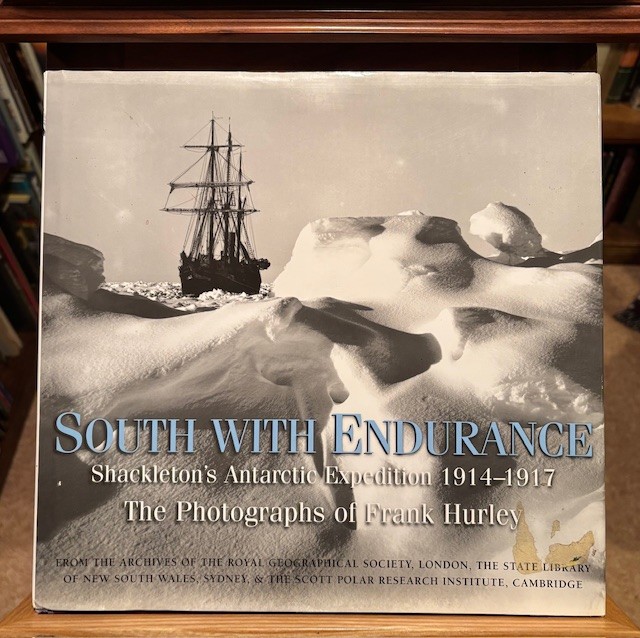
The diary of photographs ended up being the story of survival. Shackleton was to cross the Antartic, but his ship was stuck in the ice, and eventually was crushed and sank. This oversized book is filled with photographs and stories of his adventure and rescue. There are even some photographs of penguins-something not found near the North pole.
There are different names for groups of penguins: A colony: large group of penguins; Rookery: penguin colony nesting; Huddle: a collective noun for penguins: Raft: group of penguins in the water; and Waddle: a group of penguins on land.
Another upside down story, would be of an election two hundred years ago-the presidential election of 1824. December 1, 1824, the problem for deciding the President of the United States of America was sent to to the House of Representatives to work on. In the general election, Andrew Jackson received 99 electorial votes, and 153,544 popular votes. John Quincy adams received 84 electorial votes, and 108,740 popular votes. Henry Clay received 37 electorial votes and 47,531 popular votes. William Crawford recieved 41 electorial votes and 40, 851 popular votes. No one had the minimum number of electorial votes to win.
Crawford had a stroke during the election and was still sick. With no one getting enough electorial votes, Congress had to decide the next President. Jackson argued that he has won the most popular votes, and most electorial votes, so should be made president. He did not campaign Congress. Adams actively sought discussions with Congress, and it is said that Clay told him that he would relinquish his electorial concerns to Adams for a cabinet role-Secretary of State. It took several months of discussions before the vote to elect John Quincy Adams-the first time a son of a president became president.
I have a couple of books that discuss John Quincy Adams. First is Little Journeys to the Homes of American Statesmen” by Elbert Hubbard, published 1898. While this book discusses in detail the homes of American Statesmen, it also give some biography of the people.
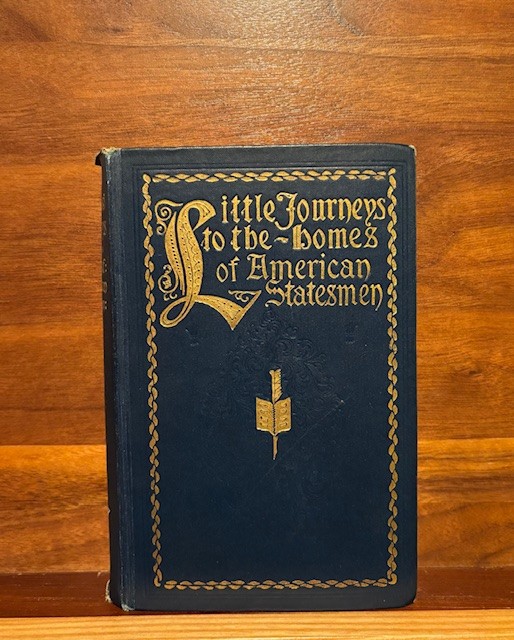
John Quincy Adams had quite a history of public service and education. Hubbard listed many: Had schooling in Paris and Leyden; Secretary to Minister to Russia; Graduated Harvard; Minister at The Hague; Minister at Berlin; member of Massachusetts State Senate; United States Senator, Proffessor at Harvard; Minister to Russia; Nominated and confirmed by Senate as Supreme Court Judge (he declined); Commissioner at Ghent to treat for peace with Great Britain; Minister to Great Britain; Secretary of State; President of United States; Member of Congress for seventeen years.
Another unsual book is Pictorial History of American Presidents, by John and Alice Durant, published 1955. There are several anecdotes about Adams. One was that while he was the most qualified for president, he had very little charisma. He was short, stout, and bald-a little penguin-like.
Also, that he would get up at five, read from the bible, then take a swim in the Potomac river. One time while swimming, someone stole his clothes. He had to flag down a boy to run to the Whitehouse to get some clothes.
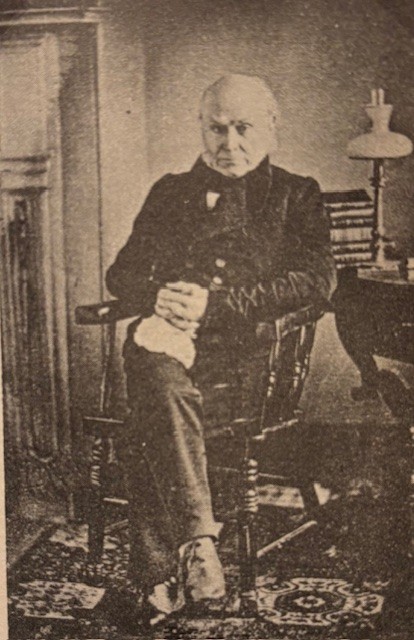
Adams also liked billiards. He was the first president to install a billiard table at the White House. The table was $50; cues $5; and billiard balls were $6. People called him a profligate, and so he paid back the government. He was also the first president to be photographed (1843).
The next election-1828 featured Adams against Jackson again. This election was a very vicious one played out in the newspapers. Jackson easily won.
How do penguins drink? Out of beak-ers.
Who is the penguin’s favorite aunt? Aunt-artica.
Thanks for reading.
 Librarytomes