November 17th is Homemade Bread Day. This is a pretty good book from England about bread, “Loaf, Crust, and Crumb” by Silvija Davidson, published 1995.
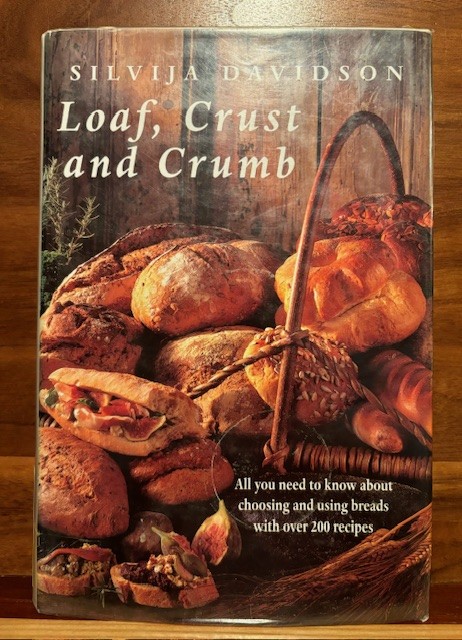
In this book are the most discriptions of types of bread than I have ever read. If that wasn’t enough, there are two hundred recipes to make your bread day complete.
What is the best thing to go on bread? With November 17th being National Butter Day, you get the hint. A great book I have on butter is “Questions and Answers on Buttermaking” by Chas. A. Publow, published in 1911, by the Orange Judd Company.
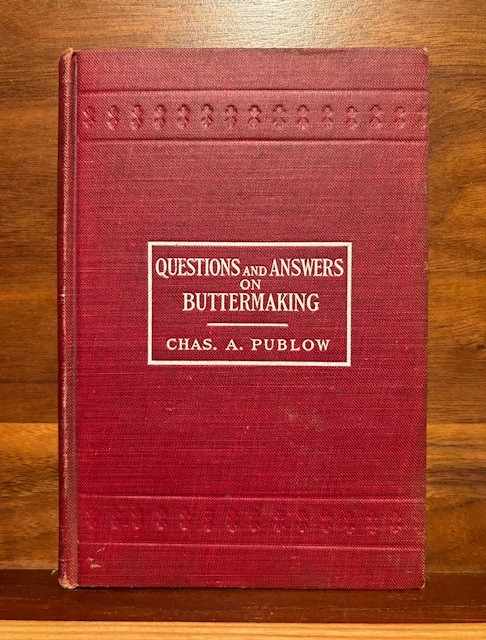
This old book on butter, is for students in college to remind them of basic butter facts. For example, the average compositon of milk has 87% water, 4% fat, 5% sugar. Milk fat forms about 80% composition of butter. Also, I found out that butter is salted to 1) give flavor, 2) assist in expelling buttermilk, and 3) to increase the keeping power of butter.
The book gives answers on what is gritty butter, what is mottled butter, and how to avoid them both. We even hear of oleomargarine, and all of the laws regarding oleomargarine vs butter.
A good place to take a buttered bread sandwich would be on a hike. November 17th is National Take a Hike Day. I have several books on the subject of hiking, that can make the adventures better during any month of the year.
Let’s start with “The Complete Walker: The Joys and Techniques of Hiking and Backpacking” by Colin Fletcher 1972. This is the best outdoor book on hiking and backpacking that I have read. There are a few tools and pieces of equipment that may be outdated, but this is a solid read.
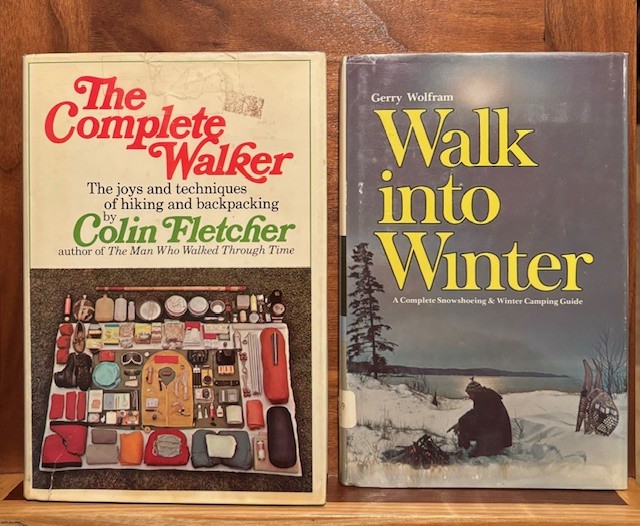
The second book is “Walk Into Winter” by Gerry Wolfram. This explains hiking in snow, in winter (and camping as well!) in great detail. Again, another knowledgeable “how to” book to read.
I like to hike a lot. The first best tool to have is a good pair of shoes. The second is a great walking stick (that can handle souvenirs). I have a collection of several walking sticks that have been a great help at their time.
In order from left to right, my walking stick from first trip to Germany. Spazierstock is what you call the walking stick. The shields attached are called Stocknagel. The next plain stick is one I used when backpacking. With a 35-40 pound pack, you like to have a little more stability walking, but also not carrying too heavy of a stick. This thin guy is hickory. Both of these sticks are over 45 years old.

I then have my “Kongo-Tsue” Japanese walking stick from Mt Fuji. We had branding at different stages of the trail burned on the stick, including the “sunrise on top” brand. A quite special “brand”, (actually a stamping made from ground lava stone from the top of the mountain) was put on the stick in a shrine called Okumiya. This shrine was also on the top of the mountain. The priests then blessed the stick. While the other brands were burned into the wood, this one was stamped on, and could be wiped off if scrubbed hard enough.
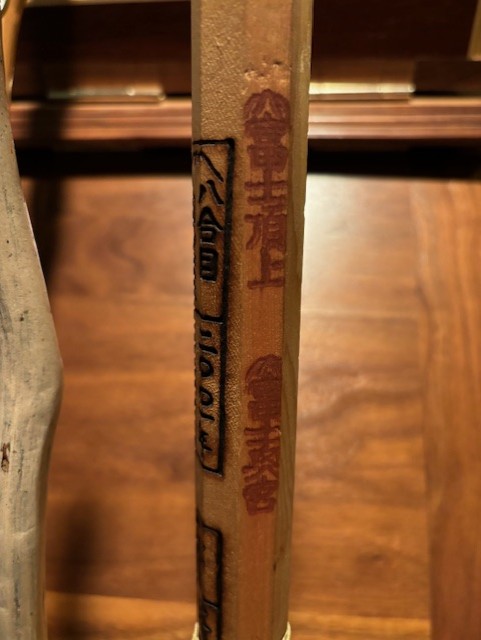
That turned out to be a very important stamp, we found out when we were leaving Japan to go home. The guard at the airport would not let us take the hiking sticks on the plane. (this was before 9-11 requirements). After arguing with his supervisor with no success, I finally took a deep breath, and stated that these were religious objects, and as such, were important to us.
Japanese do not very often say “No” directly. They normally go round-about stating “Mmmm, perhaps you are mistaken”, or “Mmmm, sorry for your misunderstanding, but”. However, this supervisor actually answered back “No, that is not religious.”
I then showed him on my hiking stick, that rust colored, ground lava-stone stamp from the shrine at the top of Mt Fuji, done by the priest. His eyes got big, as he knew in that moment, that I knew, this was a religious stamp. He then deeply bowed in front of us, and said “I am very sorry. I will ensure these are safely put on the plane, and you can retrieve them upon arrival.” He took our sticks, called another guard, handed the sticks to him, and then again bowed to us.
When we arrived at O’Hare airport, a flight attendant presented us with our Mt Fuji hiking sticks, very elegantly wrapped up.
The last stick is my current hiking stick. I use this especially when camping and hiking with my kids and grandkids. I have made each of them their own sticks, with their names burned into the top. We have been actively RV camping, and going to lots of state and national parks. Many miles have been recorded and marked on these sticks.
So, Take a hike. Get outside and explore. Just remember to “leave nature like you found it” when on the trail.
 Librarytomes