October 19th is World Pediatric Bone and Joint Day. It is to bring awareness to children’s bone breaks, and how to handle them. I have two books on bones and fractures. The first is “Outline of Treatment of Fractures” by the American Medical Association, published in 1923.
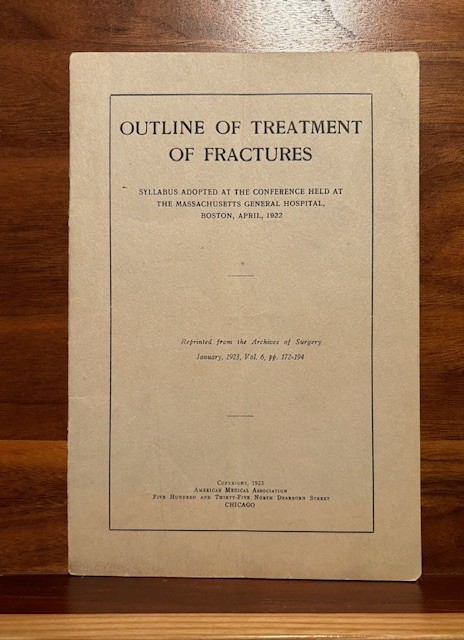
This pamphlet is like a first aid manual for doctors. I have not seen a copy anywhere else.
I also have “The Illustrated Primer on Fractures” by the Cooperative Committee on Fractures, published by the American Medical Association in 1933.

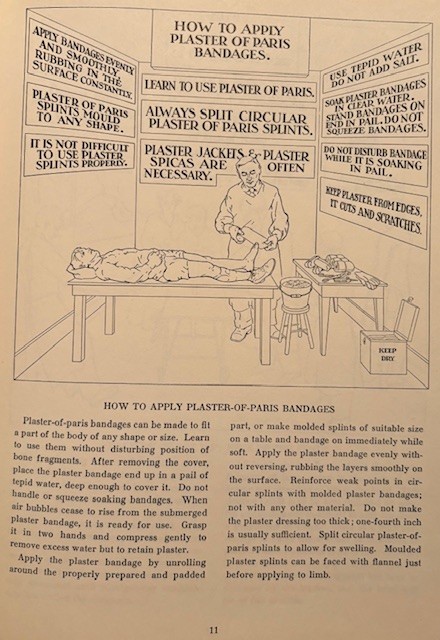
This book is very detailed in types of fractures, and points doctors need to be aware of based on where, and what type of break. There is even a page on rules of plaster-of-paris casts and bandages.
A few years back, my niece decided to change from competion swimming to cross country running. She wanted to spend more time with her dad-a triathlete, and running with him would be time well spent. About a week after making the switch, a high school race came up, and she ran in it, against the wishes of coach and parents. “It is too soon,” everyone said. Her reply was, “Pffft. I have been a rated competitive swimmer for years now. I can handle this.”
Halfway in the race, she stumbled in a mud puddle. She did not fall, but did jar her leg rather severely. She kept on running. After the race, she complained of her leg hurting. It got worse on the bus ride home. Then they went to the hospital. She had broken her femur at the ball and socket. Old people when they fall, are prone to this type of break. And she had run, several miles with the break. Her muscles were that in tone, that they held the bone in place…kind of.
I wrote a little book about the story, colored it, and gave a copy to her and her mom. I still have a black and white copy. After some time in a body cast, she healed. The only change was that her bone was not quite straight when it healed. It caused her behind to wiggle a little when she walked. It turned out to not be a bad thing.


The ((end))
 Librarytomes