October 7th is World Cotton Day. Lets take a quick around the world book tour. I have the book “The Story of the Cotton Plant” by Frederick Wilkinson, published 1904.
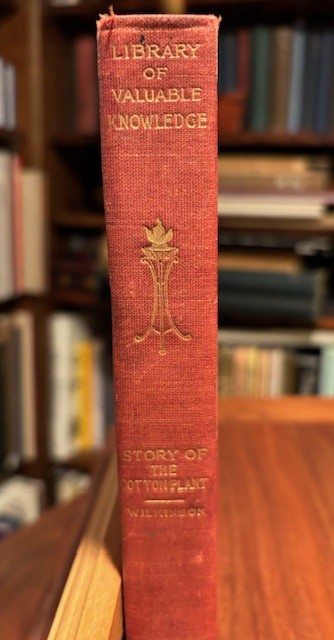
This is a good book to find out about cotton. We get the history of cotton, how it is cultivated in different cultures, the science of cotton fibers, and mechanic developments in harvesting and processing cotton.
I then have “Egypt in 1898” by G.W. Steevens, published in 1898. This is a book about the author’s travels in Egypt.
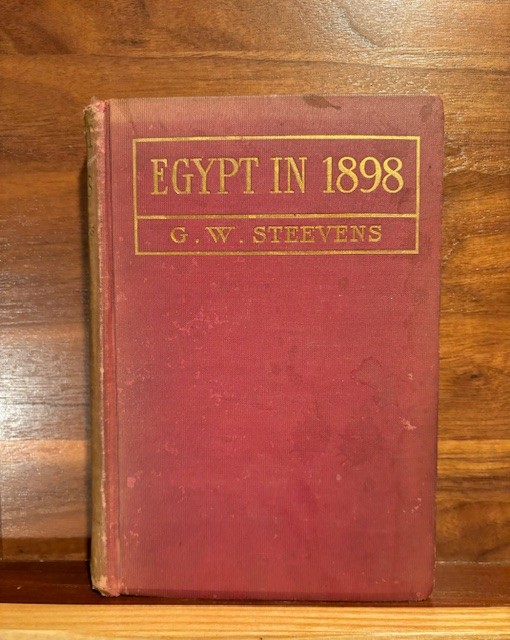
He discusses the Nile valley in the Lower Egypt delta. There the cultivation of cotton is year round. In that year alone (1898), they doubled the yield of cotton for sale exports. Egyptian cotton is thinner and longer stranded than other cottons, and very desirable.
I then have the book “Cotton in South Africa” by W.H. Scherffius and J. du P. Oosthuizen, published by the South African Central News Agency, 1924. I have collected several volumes of this printer’s books on improving South Africa.
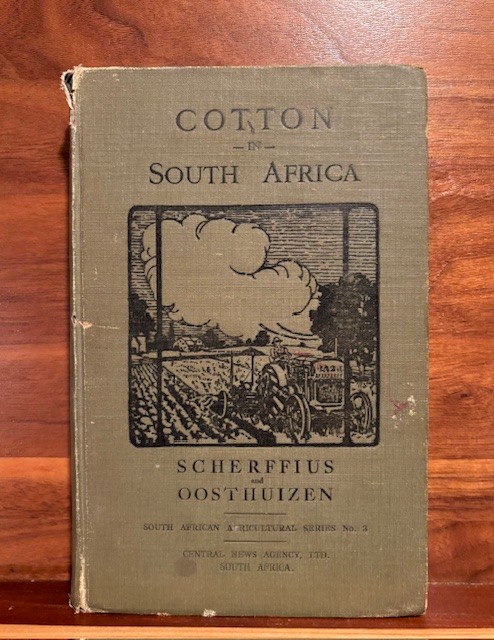
This book also gives us a background of the history of cotton in the world, but then goes into the specifics of how to grow cotton in South Africa. There are many pictures and stories on how to profitably grow cotton with that specific climate and soil quality. It also goes into details of the machinery involved.
The book is one of several how-to farming book for growing in South Africa-a series of specific crops . I believe this book, in the early 20th century, was to coax people from England to invest, and build plantations.
I then have “Myths and Legends of Flowers, Trees, Fruits, and Plants” by Charles M. Skinner, published 1911. I have used this book a lot for finding tales and fables for various plants.

Under cotton, there is an interesting tale of the beginning of cotton. Down south, near the swamps edge, a tiny fairy spent her time spinning. She made the most beautiful fabrics. A nearby spider, who thought of himself as a pretty good spinner, moved to a bush next to the tiny fairy. He became jealous of how much better of a spinner she was compared to him.
The spider decided he needed to kill her. He chased her throughout the field all day. Still clutching her wheel and spindle, she barely stayed out of his clutches. As it got dark, a firefly guided the tiny fairy to a bush that had a tiny pink blossom. She jumped into the center of the blossom, and it closed around her.
The spider could not open the petals, so he weaved a web around it, waiting for the tiny fairy to try to climb out. The spider killed himself in anger when the petals fell off, and there was only a small ball, and no tiny fairy. It turned out that the fairy had hidden in the ball, and when the ball opened up, all of the beautiful fabric that the fairy had been spinning while hiding, poured out in a tassel of snowy white. Men then wove the threads to make garments for themselves, and would bless the fairy of the cotton plant.
My wife calls every spider she sees in our house ‘Cotton Eye Joe’, because she wants to know:
“Where did he come from?“
“And where did he go?”
Thanks for reading.
 Librarytomes