On September 20, 1863, Jacob Grimm died. He and his younger brother Wilhelm were the Brothers Grimm, that put so many German folk and fairy tales to print. This is one of my older books of the fairy tales. “Grimm’s Fairy Tales: published by J.H. Sears in 1926.
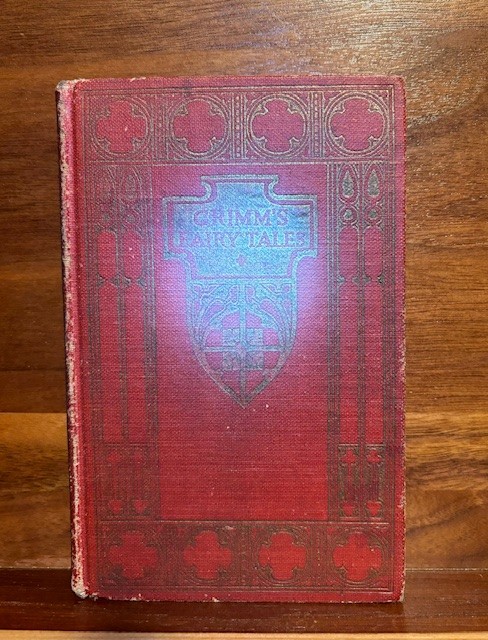
These tales are before they were watered down for modern children. For example in Cinderella, the two step-sisters when their turns come up to try on the slipper, one cut off her toes to fit, and the other cut off part of their heel. A pair of doves squalked as each were going to get married at the church, and the prince stopped each ceremony to notice the blood filled shoes. Then the bird pecks out their eyes when the step sisters showed up to Cinderella and the Prince’s wedding.
An even older set of stories that Jacob Grimm put to print is a real prize in my library. It is “Deutsche Mythologie” in two volumes by Jacob Grimm printed in 1843 and 1844.
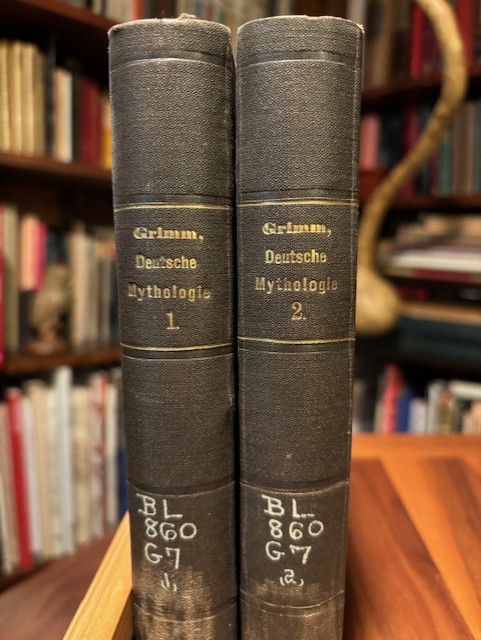
I saw a copy of these books in a glass case when I visited the Brothers Grimm Museum in Kassel, Germany. I spent a few years looking before I stumbled onto these. They were withdrawn from Breslau University in Germany (now Wrocław, Poland), and then withdrawn from service from American International College Library in Springfield Mass.
The museum was a wonderful tribute to the Brothers Grimm. There was also a room devoted to Hans Christian Andersen.

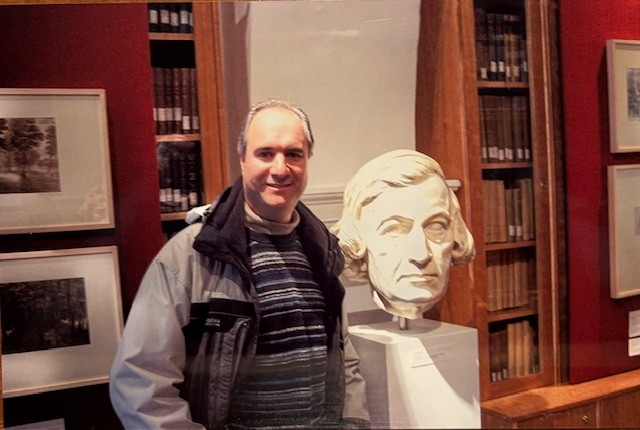
Upstairs, we went through a library of orginal works, and tried to get quick pictures next to this statue of Jacob Grimm. Our non-English German guide was none- to-happy that we were taking photographs. Our camera was shut down after this shot.
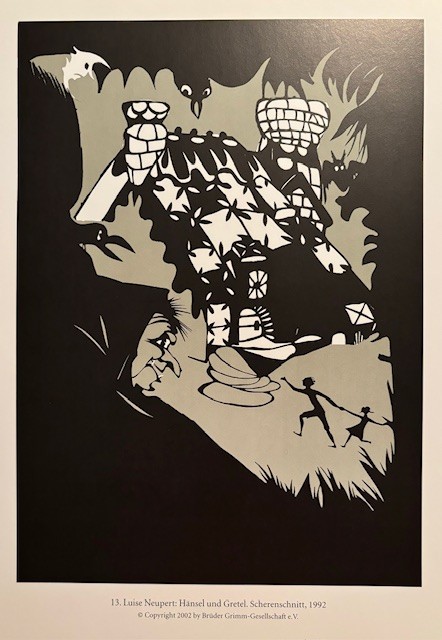
I bought this book of silhouette paper cutting pictures from the Grimm brothers Museum. Each of the papers are of a different Grimm Fairy Tale, done by the artist Luise Neupert. We saw a room of large wall hangings of these works of art.
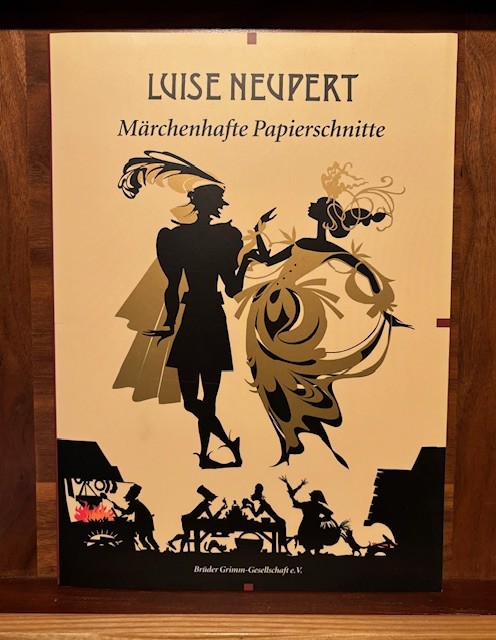
Here are two of the pictures made by cutting paper: Hansel and Gretel, and Little Red Riding Hood. Notice that the hunter is going to cut Grandmother and Little Red Riding Hood out of the wolf’s stomach.

September 20th, 1496 the Meia Earthquake in Japan caused a tsunami washing away the building that housed the Kamakura Buddha. The statue was unharmed, but perhaps 40,000 people were killed. It is now the largest outdoor Buddha statue in the world.
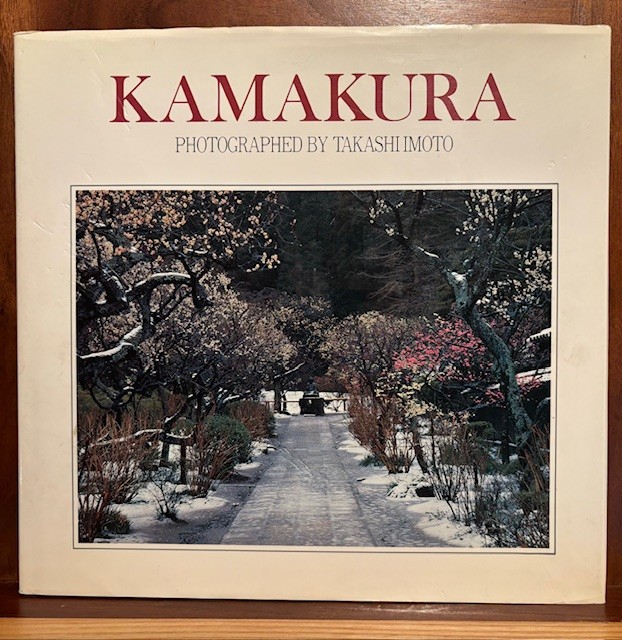
I have the book “Kamakura” by Takasjoimoto, 1987.
I have also visited the Kamakura Buddha. Here are a few pictures. We actually rubbed the Buddha belly from the inside.


September 20th is POW-MIA Recognition Day-the Third Friday in September. To honor the day, I have one of my most amazing cookbooks “Recipes Out of Bilibid” Collected by Col. Halstead C. Fowler and Compiled by Dorothy Wagner (his aunt), published in 1946.

This book of recipes were collected from prisoners in the brutal Bilibid prison held by the Japanese. To keep morale up, Col. Halstead would ask what meal they missed most from back home. They would tell their stories and he would write the recipes down on backsides of envelopes, and wherever he could hide them. This book, when possible, has the author, and rank, and country they were from, or just food they hungered for. It is quite a moving cookbook.
Thank you for reading today in this roller coaster ride of stories. Sometimes you just don’t know where a day in the library will take you.
 Librarytomes