August 14th is National Navajo Code Talkers Day. It is to honor the 29 Navajo Nation and Native Americans who served as radio code talkers in the Marine Corps during World War II. They used their unwritten and very complex sounding language to help with codes sent especially to the Pacific theater. Their codes and language were not broken during the war.
I pulled a few of the code words from the CIA website about the Navajo Code Talkers. Using their system, a message could be translated in several minutes, instead of several hours.

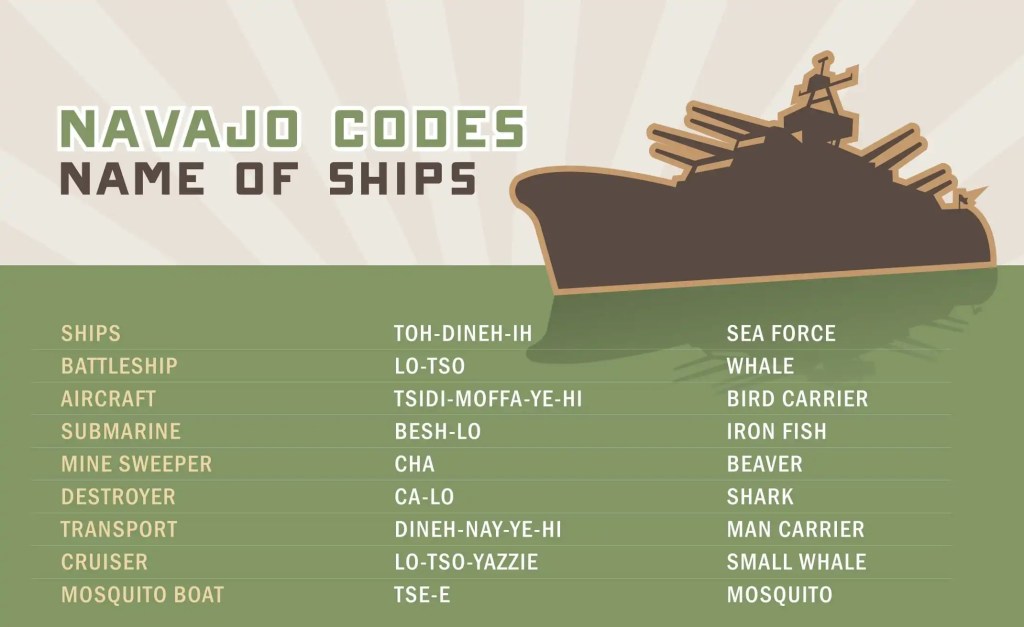
In the book the “Wild Blue: the Men and Boys Who Flew the B-24s Over Germany” by Stephen E. Ambrose, 2001, the author interviewed many pilots and navigators, those who were on B-24s. A navigator, C.W. Cooper said he had met one of the Navajo Code Breakers in June of 1945.

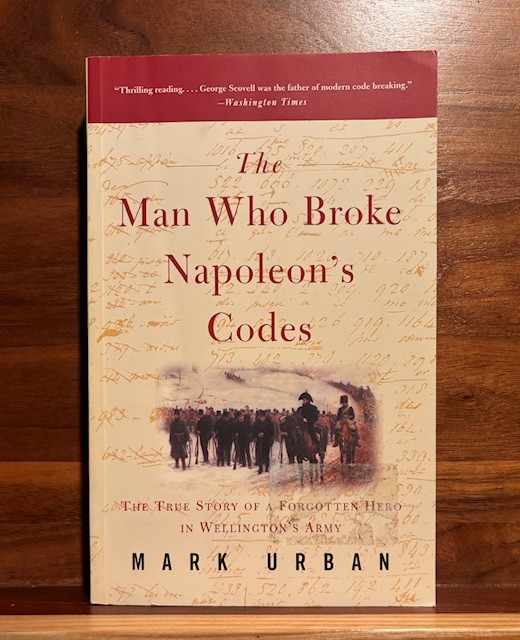
After reading about the Navajo Code Breakers, I turned to the library for more code books. I easily found “The Man Who Broke Napoleon’s Codes” by Mark Urban, 2002. The subtitle is “The True Story of a Forgotten Hero in Wellington’s Army.” This is a great story not just about General Wellington, but of George Scovell. He played a critical role in deciphering Napoleon’s codes. This was a very interesting read. Scovell retired as a general, with many battle awards.
I have the book “The Kid’s Code and Cipher Book” by Nancy Garden, 1981. This interesting book explains ciphers and codes, and how to write some. It then also explains how to understand and figure out more complex ones. If someone is interested in wordplay and confusing others, this is a wonderful book.
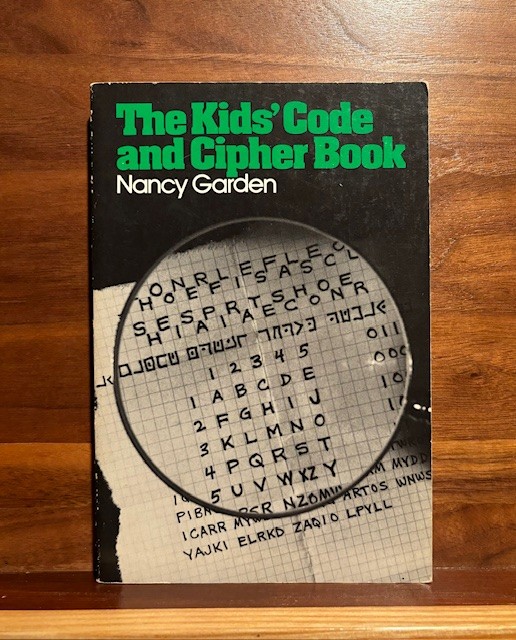
The book is OK. I would rather read about people and ciphers than invent them.
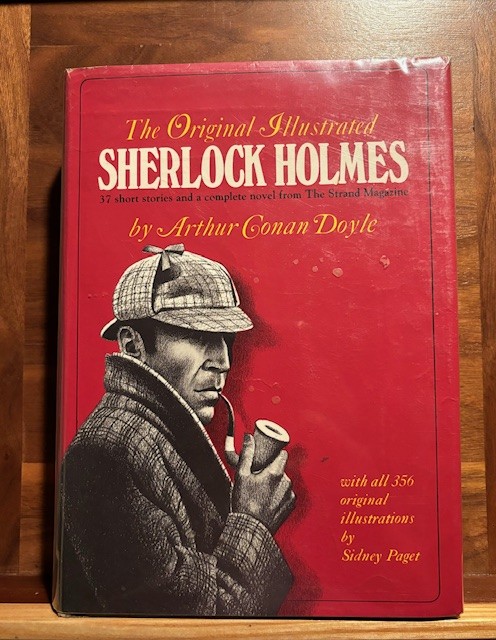
When I read Sherlock Holmes, I really enjoy this book, “The Original Illustrated Sherlock Holmes” by Arthur Conan Doyle. While this book was published in 2001, these pages and illustrations are in the same double columns as a person in England around 1900 would see them. I am reading Sherlock Holmes from the Strand Magazine, just like everyone first discovered Sherlock Holmes.
I have used this book many times when reading before I go to bed. Each story is around fourteen or fifteen pages long-perfect for short night-time reading. This is actually one of my favorite books.
In the story “The Adventure of the Dancing Men”, Holmes and Watson have to decode a secret message. Doyle invented a code just for this story.

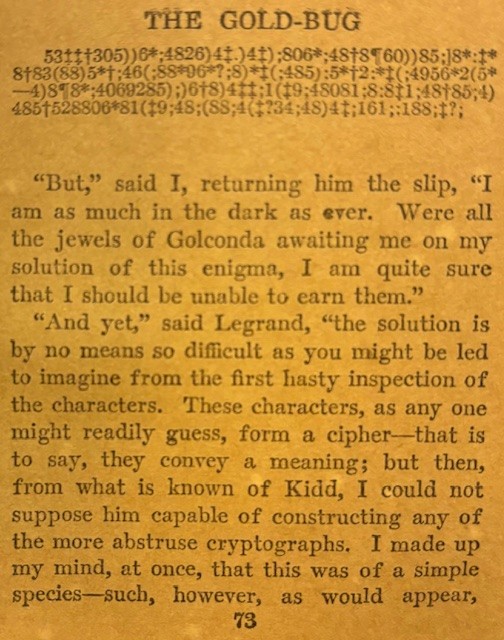
My last book is from an author who really liked codes, Edgar Allen Poe. This is the story “The Gold Bug” by Poe, published by The Little Leather Library circa 1920. This miniature book story was actually entered in a contest that Poe won in 1843. It tells the story of William Legrand. His servant-Jupiter, wraps a large bug in a piece of parchment that Legrand sees has invisible ink, when held to a fire.

This is the code in the book. Legrand then explains in the story how he translated the code.
This is the translated code, that the Legrand then has to figure what it means:
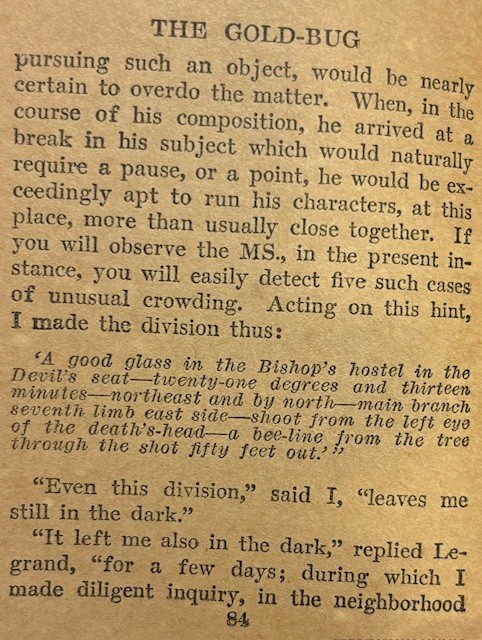
He does solve the riddle. Legrand and his servant have found Captain Kidd’s treasure chest, that they estimated worth $1,500,000 dollars, but after they kept a few trinkets and sold the rest, “it was found that we had greatly undervalued the treasure.”
These books are treasures.
ankthay ouyay orfay eadingray.
 Librarytomes