Today is August 3rd. There are several holidays today, and they all, to some extent, have to do with seeds. I happen to have some hard-to-find books on today’s subjects. So let’s start this off.
August 3rd (or the first Saturday in August) is National Mustard Day. I have a very old little book “The Wonders of Vegetation: The Seed” published by the American Sunday-School Union, 1845.
The book states “The seed of the mustard is very small, but in Judea it grew to the size of a large tree. The Lord Jesus makes use of the mustard seed as a figure to show the growth of his kingdom in the world, from a small beginning, till it shall spread abroad and fill the whole earth.”
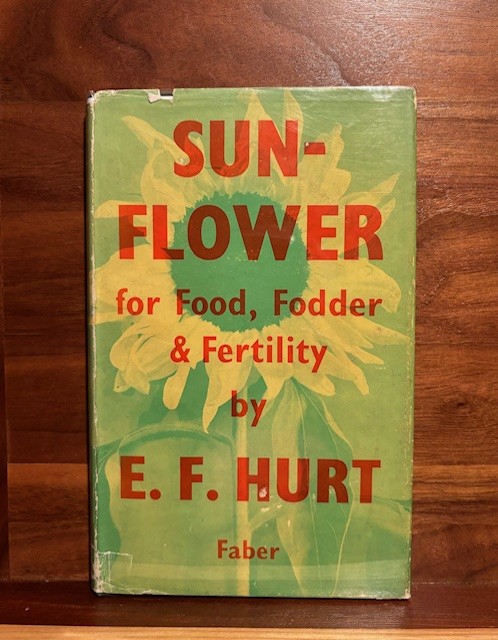
August 3rd (or the first Saturday of August) is National Sunflower Day. I have an interesting book “Sunflower; for Food, Fodder, and Fertility” by E.F. Hurt, published 1946. This book was written for post-war England on the benefits of growing sunflowers.
The author states “Sunflower oil for human consumption is equal to the finest olive oil. For cooking and frying, canning and medicinal purposes it has the highest qualities. Sunflower cake for animals is the equal of almost anything…the seed is top grade, high protein poultry food.” The author then gives us detailed help in how to raise sunflowers as a profitable crop in England.
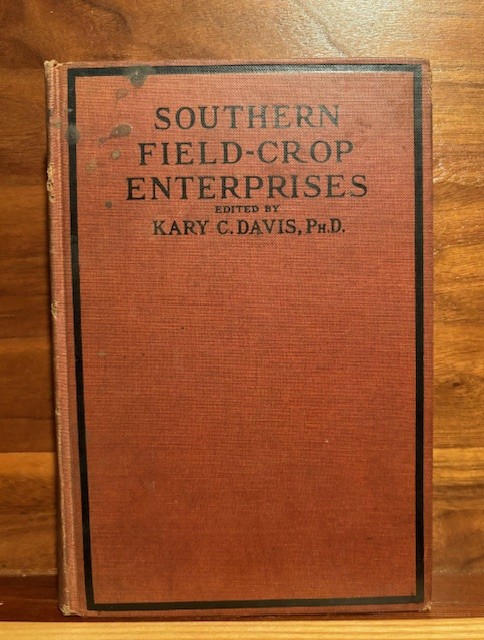
August 3rd is National Watermelon Day. I have a book “Southern Field-Crop Enterprises” by Kary C. Davis, 1928. This is a text book for vocations in agriculture.
To make a profit in growing watermelons, they are usually grown in areas that are conducive to growing, then they are shipped to the buyers market, usually by train car. Costs can vary greatly with the rent of land and especially amount and price of labor. In watermelons, it should cost $50 to $75 to grow a freight car’s worth of watermelons. They should weigh between 18 and 36 pounds, with the leading varieties being Tom Watson, Irish Grey, and Excel.
Watermelons are ripe when heavy sounding when thumped, by yellow tinge on outside of melon, and by the death of the tendril at the stem end of the melon. When loading into a freight car, one can get 600 to 1000 melons, according to size, safely inside. They recommend using children, when possible for some of the labor.
August 3rd is also National Grab Some Nuts Day. While there may be a pecan day or a walnut day, or a pistachio day, this is to be able to grab any nuts.
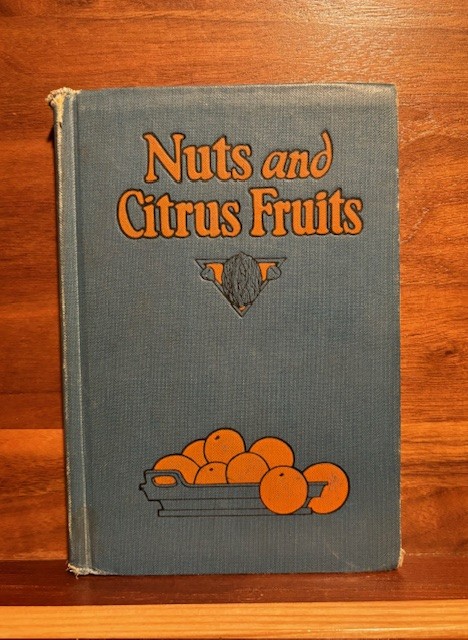
I have the book “Nuts and Citrus Fruits” published 1928. It is actually two books, one on nuts by Francis C. Owen, and one on citrus fruits by Ellen M. Ramsay. The first chapter of the nut book is “Joys of Nutting”.
The author states “Comparatively few of the boys and girls of to-day know anything about the real joys of going nutting. When your grandparents were young it was quite common for boys and girls to form parties each autumn and go to the woods and fields to gather nuts. The boys climbed and beat the trees to bring down the nuts and the girls vied with them in gathering a supply. Often the company went to one of the farm homes for the evening to enjoy dancing, a candy pull, or simple games.”
Then the author talked about the specifics of growing, and harvesting various types of nuts.
I have one last book today about my topics, Myths and Legends of Flowers, Trees, Fruits, and Plants” by Charles M. Skinner, published 1911. This book has a story or myth about each of our topics.
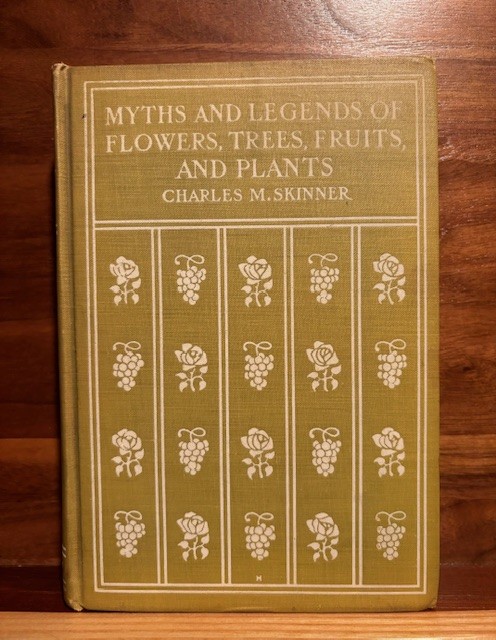
For Mustard, the author tells us of a Buddha story that a young mother whose baby just died, frantically asked how to save her baby. She was told he required a handful of mustard seed from a house where no child, husband, parent, or servant has died. Day after day she went to houses and asked. No one could help her. She then realized that she had been selfish in her grief, and everyone has suffered. She buried her son, and went back to Buddha, telling him that she had understood his meaning. He said “You thought you alone had lost a son, but death rules us all.”
For Sunflowers, “Being such an obvious symbol of the globe of light, our big sunflower was much esteemed in Peru by the sun worshipers. Their priestesses, in the sun temples, wore copies of these flowers in gold, to the great joy of the Spaniards, who immediately possessed themselves of these shocking eveidences of unauthorized religion, and put the objectors to the sword.”
For Watermelons, “The king of Tuscany was once father to triplets, whome he never took the trouble to look at, because his sisters, jealous of his queen, told him that they were not human, but a cat, a snake, and a stick.The king believed them, cast his wife into prison as a witch, and ordered the progeny to be thrown into the sea. The gardener, to whome the last task was allotted, took the poor little people to his home, and reared them as they were his own children, and taught them to raise flowers and fruits. One of the first fruits that came from their garden was a watermelon, so big and tempting that it was fit for the king, and on to his table it went. When he cut it, behold, its seeds were precious stones. “Oh wonder!” roared the monarch, “can a melon produce stones?”
“As easily as a woman may give birth to a cat, a stick, and a snake” declared a maid. Then they labored with his primordial intellect till at last he understood; whereupon he released his wife, took his children home, and, instead of drowning his systers, ended the scandal by making a public show of them at the stake–and incidentally exposing his preceding imbecility.” ( I enjoyed this twist with wording.)
For Nuts (Walnut), “The Greeks and Romans knew it as the Persian tree and dedicated the walnut to Diana, and her feasts were held beneath it. They gave it other than a chaste significance when they strewed its nuts at weddings, to denote fecundity. In later times, yokels have used the nuts in telling fortunes, for spirits, commonly of eveil, lurk in its branches and exert an influence over its fruit, and those who use it. There was a walnut in old Rome that was so filled o’nights with mischievous imps that they became a public scandal, and some centuries ago, it was found necessary to cut it down and build the Church of Santa Maria del Popolo on its site.”
I may be nuts, but I hoped I seed-uced you to perhaps read just a little more. I would be Melon-choly, otherwise.
 Librarytomes