On July 23rd, 1903, Ford sold his first Model A to a Chicago dentist, Ernest Pfennig. That sale lends to some interesting books and stories about cars.
I have several good books on automobiles. The first is ANOTHER book from Landmark Books, “the Early Days of Automobiles” by Elizabeth Janeway, published 1956. What a great read. The first chapter is about the first horseless carriage race in America, Thanksgiving Day 1895. It was in Chicago, from Jackson Park to Evanston, and back again.
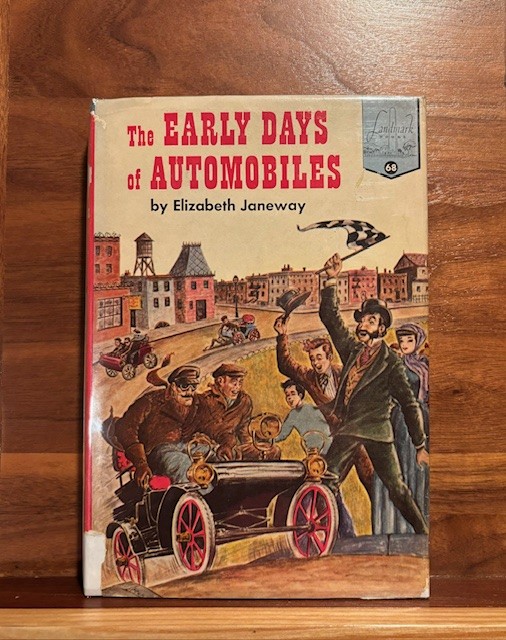
There were 90 applications, but only twelve showed up. Of those twelve, only six were ready to start the race (in a major snowstorm). Of the six cars, three had gasoline engines designed by Karl Benz. Two were electric car one by Sturges and the other Electrobat. The sixth car was a gasoline car built by the Duryea brothers, Charles and Frank. Frank drove and won the 52 mile race in just over 10 hours, at 5.2 miles per hour. The Duryea brothers were the first company to produce gasoline cars, right here in Peoria Heights. One of the few surviving cars is in the Riverfront Museum in Peoria.
The book goes on to Ransom E. Olds, who set up Detroit’s first automobile company in 1897. In 1903, the Ford Motor Company was organized, with $28,000 cash from supporters. Those supporters lived to receive millions from their investment. Henry Ford learned early to make a cheaper car for the common person, not just cars for the elite. Between 1916 and 1926, half of the cars manufactured in America were Fords. There are plenty of other stories and many pictures in the book.
I can only find two pictures from the Mercedes-Benz museum in Stuttgart, Germany when I visited it. We were there during the last week of the museum, before it would close and move next door to a much larger building. We saw wonderful cars there, even a 1888 gas powered motorboat owned by Otto von Bismarck.
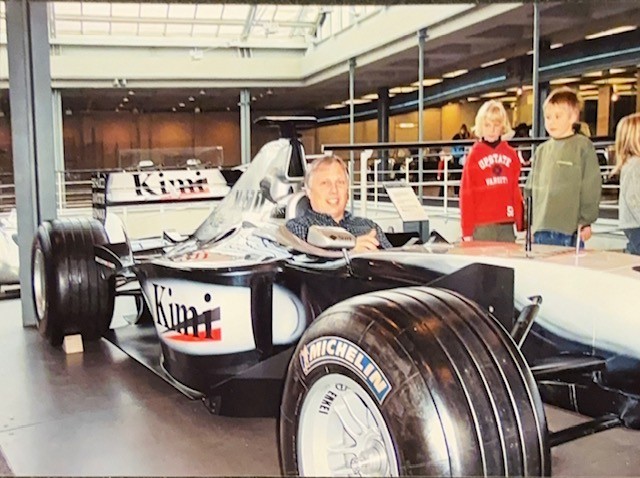
“Entschuldigung, Kinder. Ich muss in diesem Auto sitzen.”
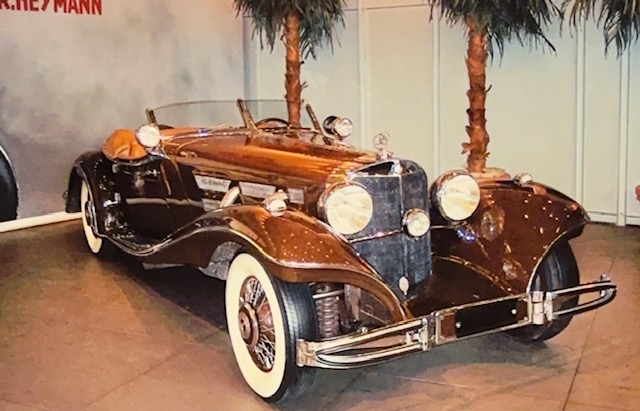
I don’t remember anything about this car, except that it was the most beautiful car at the museum. (After being directed to the museum website, I believe this car is 1936 500 K Special Roadster.)
I have a second book to show today. I have not had it long, and was very hard to find. It is “Cars in Pictures-Visual Industry Series” by David Hebb, 1965. It is part of a series of books, in which I already have several others, one on Diamonds, and one on Pearls. I was very suprised to find it on line, and was excited just to get it, and then doubly excited to read it.
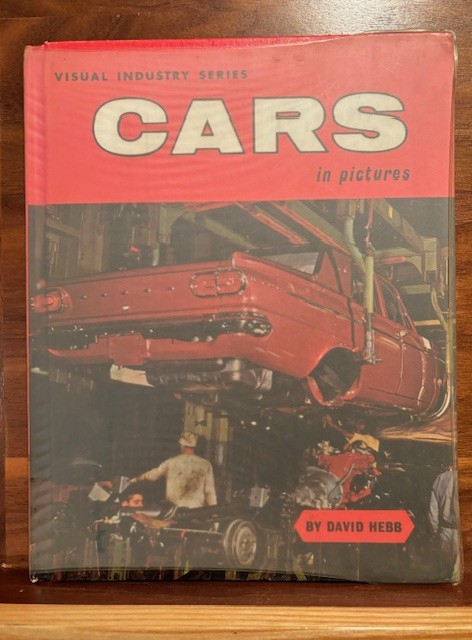
It may not seem like an exciting book, but it goes into the entire process of how a car is produced. From life-size clay models to fiberglass castings. to how they make stamping dies, casting and forging, to assembly and testing. This was the most in-depth, yet easy to understand book on car making. It was an up-to-date, cutting edge detailed book from 1965. I don’t know if there were just not a lot of these books made, or if they were snapped up by Car and Autoworkers collectors. Either way, it is a prized book.
Cars grew quickly in the United States. In 1896, there were sixteen cars in the country. In 1906, there were over a hundred thousand. Roads had to grow with the coming of the automobile, along with gas stations, and car parts, and tire sales, even stop lights. The landscape changed with the growing ease of travel.
Thanks for coming along for the ride.
 Librarytomes