Have you heard of “The Tinkerbell effect?” Something exists because enough people think it does. J.M. Barrie, the author of “Peter Pan” said “Do you believe in Fairies? If you believe, clap your hands!”
Kids still believe. That is why we have International Fairy Day on June 24th. I still believe, and would like to show you with a few magical books. Some magical pop-up books.
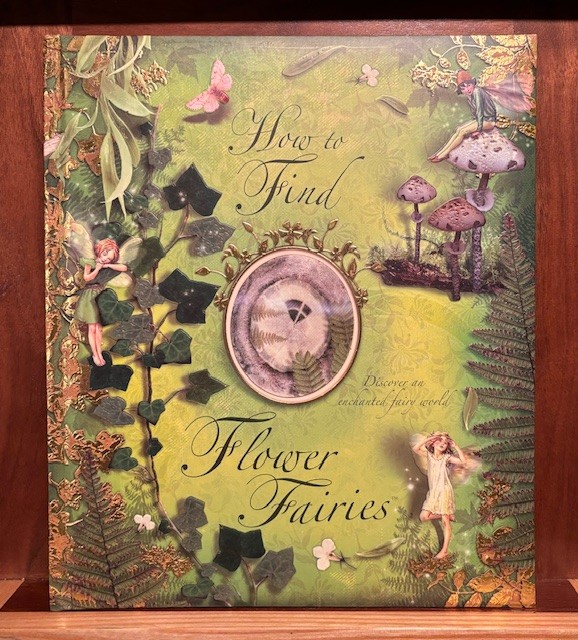
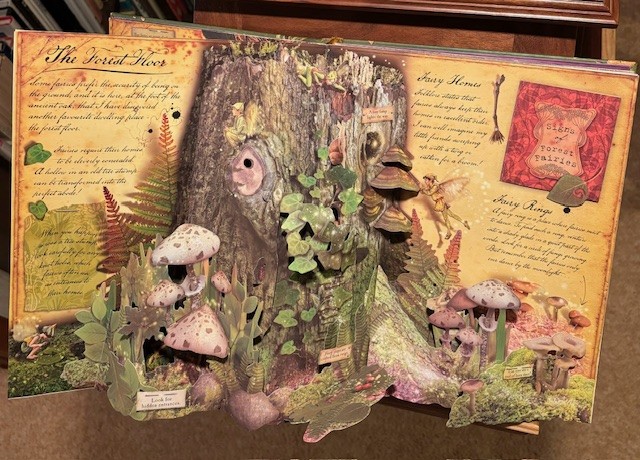
The first book is “How to Find Flower Fairies” by Cicily Mary Barker, 2007. This wonderful popup book helps people understand a bit of fairie-lore, and their habitat. The author with the help of some detailed pop-ups, shows where fairies may live: in flowerbeds, under trees, in marshes, and many different places. The pop-ups give great 3-D examples of where fairies live and hide. It may help you to believe.
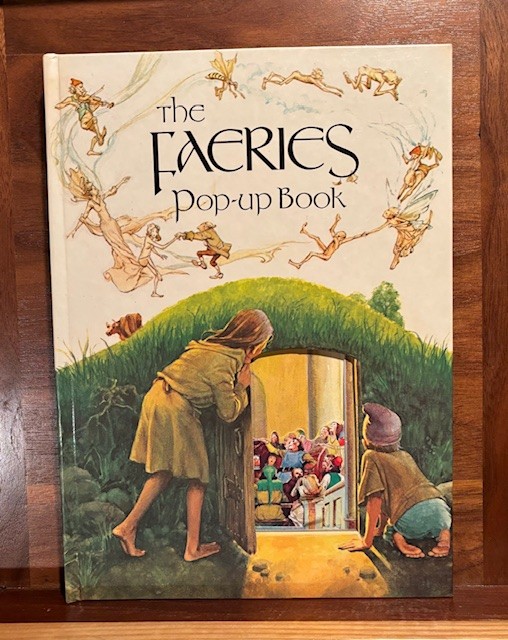
My next book is “The Faeries Pop-up Book by David Larkin, 1980. This older book has perhaps simpler pop-ups (except for a dancing faerie that spins when you open the page!), and it goes into much more detail about the types of faeries. You also learn about manners, and spells, and other actions when around faeries.
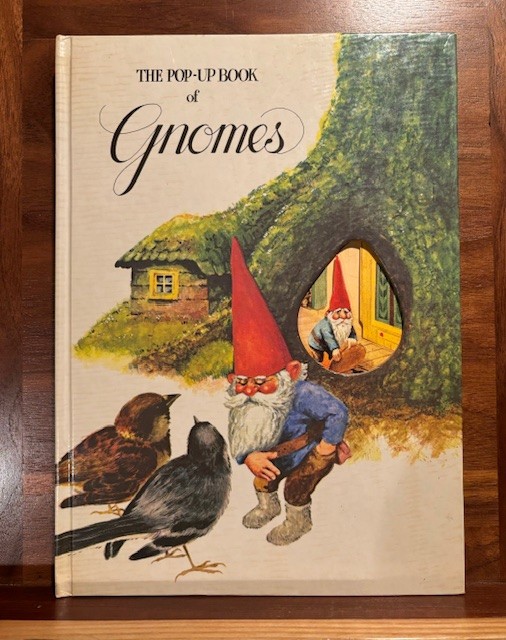
My mom believed. Being Swedish, she believed in gnomes, especially Tomte. She had stories about how Tomte will look over your farm; saved hers from burning down from lightning. That is why I have “The Pop-up Book of Gnomes” by Rien Poortvliet and Wil Huygen, 1979. This is another pop-up book that gives a little history of, and habits of gnomes. I will have a discussion one day of just Tomte, and believers. My mom helped make a believer in the manager of the Swedish store in Bishop Hill, a Swedish town full of old lore.
So kids believe. Some adults like my mom, remained believers their whole lives. What happens when one stops believing? Are there things in the woods, in the fields, in the gardens, when one does not believe in fairies. Perhaps there is a scientific answer.
June 24th is the begining of National Insect Week (24 – 30) in the United Kingdom. As adults, there is always that scientific answer to everything. Perhaps they don’t believe in fairies, but they can see dragonflies flitting about. For non-believers, it is all about insects and bugs out there. And yet, I still have some magical, pop-up books for them:
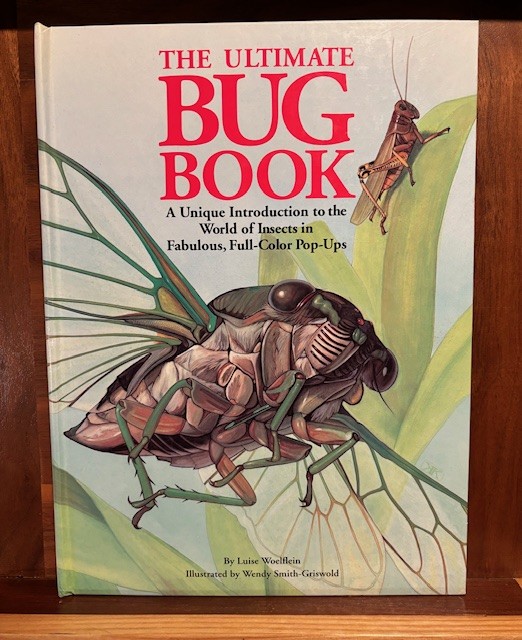
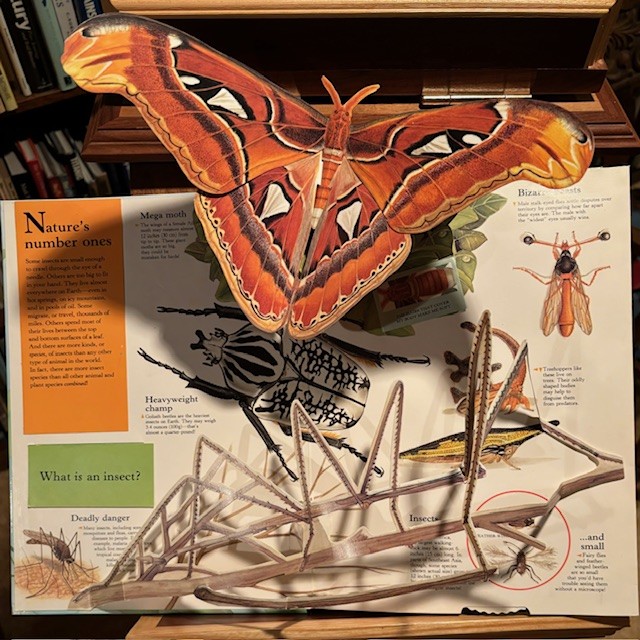
I have the pop-up “The ultimate Bug Book” by Luise Woelflein, 1993, to help put a bug face on what is outside.
I also have a four book “Dimensional Nature Portfolio Series” of pop-up books: “The Beetle” and “The Butterfly” both by Maria M. Mudd; “The Spider” by Luise Woelfein; and “The Bee” by Dr. Beth B. Norden. While there is only one main pop-up on these books, they are big. These books are nine by twelve inches, so when open, they are large pop-ups.
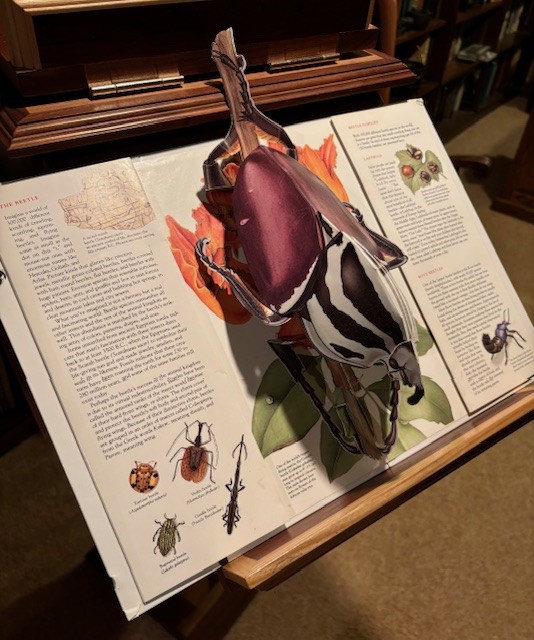
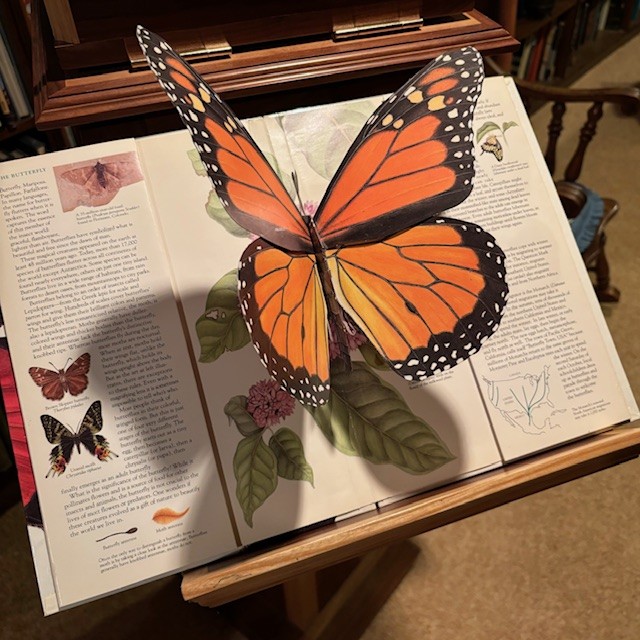
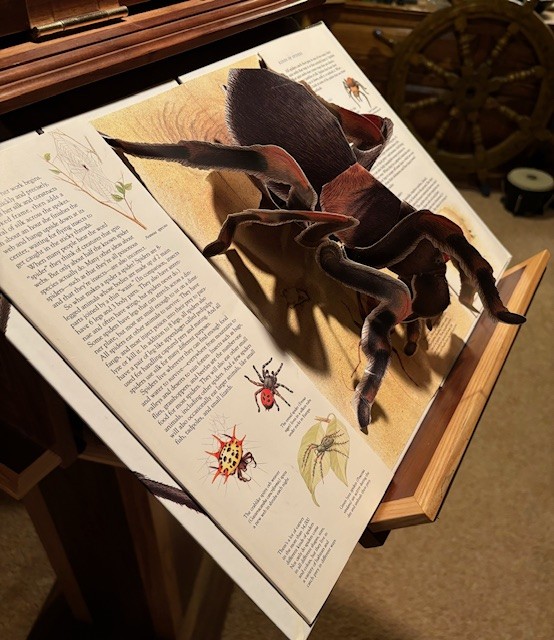
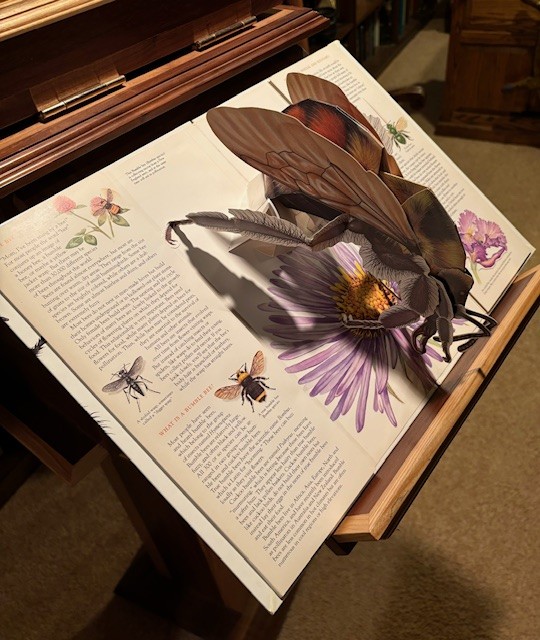
So based on how old you are, in age or in attitude, what is outside? Are you a believer? Are you clapping, or not? I try to entertain both groups in the library. I would like to talk about one more book today…
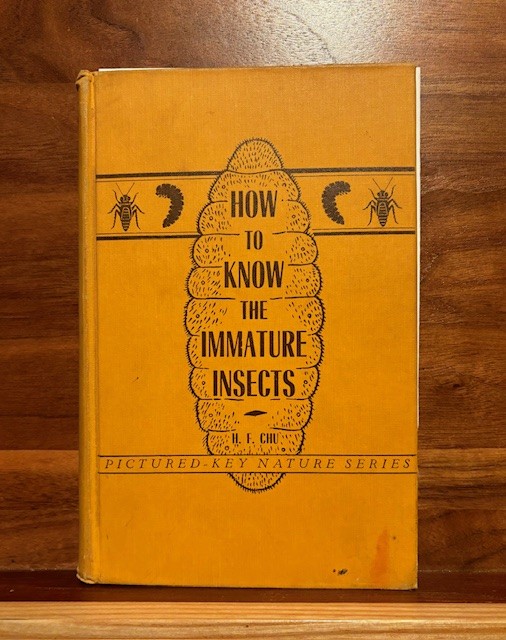
This is “How to Know the Immature Insects” by H.F. Chu, 1949. It is not a pop-up book, but still magical (so I thought). I took this book to a big training meeting in St Louis, when I worked for Target. We would have these yearly meetings for management to review new ways to train, or new programs to learn. Sadly, a few would go to the meetings just to get away from the store for a day. I got up at the end of this meeting to talk (un- scheduled of course), held up the book, spoke of the title, and showed them a figure in the book about Metamorphosis.
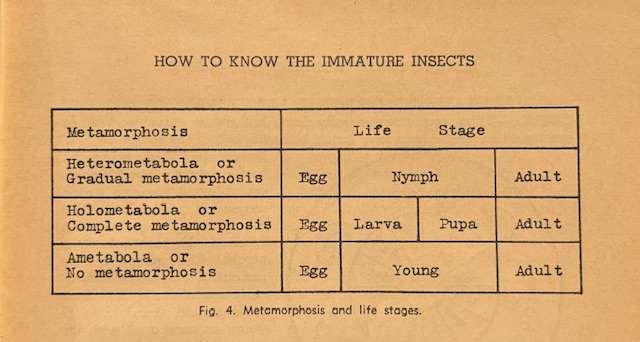
While trying to keep it all simple, I reminded everyone that we today, were like immature insects that have hatched. There are three types of immature insects, and it was up to us on how we would develop. Would we be (I explained):
1) Ametabola, or no metamorphosis. Those insects grow older but do not change, they just get bigger, like pill bugs-Rollie Pollies. Those manager insects take todays meeting and knowledge, and just eat it to get fatter-no change.
Or do we want to be like
2) Heteramertabola or gradual metamorphosis, or
3) Homometabola or complete metamorphosis.
A gradual change would be like a nymph that looks the same but changes like, growing wings. A complete change would be like a caterpillar that makes a cocoon then turns into a butterfly. Those two type managers would take today’s training, and become better, perhaps to fly and train others a little better than before; or the few that completely change, and perform amazing things. I ended with “you are all immature Insects. How will you grow up, when you get back to your stores?”
I sat down, proud of myself. I thought I had taken something very random, and made an effective point for others to think about as they drove home from an all day training. Some managers thought it was clever, and nice way to end the day. Others shook their heads. A few said “Yep. That’s Scott.” Then my district manager, my regional trainer, and my LP district manager, came up to me. All three seemed confused at my comments, (which were all not on the program). They looked at the program, and then back at me. All three had written on their faces, “why were you talking” there was no “nice comments, Scott.”
They did not believe in me. They did not understand. They just wanted an answer why. I thought I had to tell them something, and then it came to me…what I had told my kids a lot when they were younger.
“Sorry,” I told the supervisors (I truly did!). ” I knew that this was National Insect Day so I had to bug someone…” I was then told to just not do that again. I knew that there was no metamorphosis with them that day.
Thanks for reading.
 Librarytomes