June 4th is National Cheese Day. Cheese is made from the curds of milk from cows, goats and sheep. I would like to do a quick tour of cheese from some books I have in the library.

“Cheese” by Lucius L. Van Slyke, 1941, published from Orange Judd. This is, as the author states “A text-book for the use of Dairy teachers and students in classroom and workroom. Also a handbook and work of reference for the daily use of practical cheese-makers in cheese factory operations.” The book is all about the science of cheese-making, including not just the machinery, but safety practices, and pasturation. It is very detailed starting from the cow, and safety measures to get to factory, and then the steps take to ensure all is clean and sanitary throughout the making of cheese. I read the book briefly one evening, and focused a lot on the pictures, showing of processes.
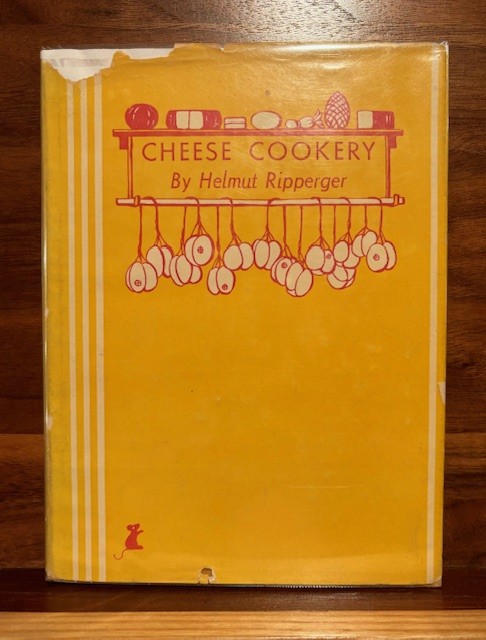
Easier to read is “Cheese Cookery” by Helmut Ripperger, 1941. One good recipe is Asaragus with Parmesan Cheese. It calls for asparagus, then butter, then Parmesan cheese, then more butter, then more Parmesan cheese, and then bake. The author reminds us that “in Italy, you would know that there are three states of this cheese, vecchio, stravecchio, and stravecchione, old, very old, and very, very old. The last is the preference of the connoiseur.”
Another good recipe from the book was Croȗtes au Fromage Portugaise. This would be made with fried rye bread rounds with fried slice of tomato, and cream sauce made with Swiss cheese, then put under the broiler. The entire recipe looked delicious.
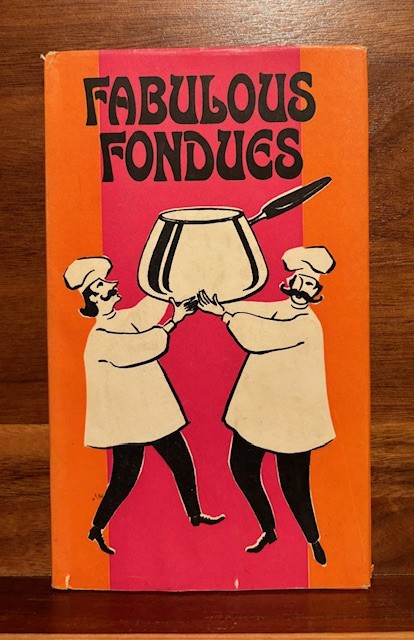
My next cheese cookbook is “Fabulous Fondues” by Dorothy H. Becker and Nancy S. Wallace, 1970 from Peter Pauper Press. I collect a lot of books from this press. They began in 1928, and still publish today. And, I love fondues. Every New Year’s Eve, we set up several fondue pots for a late dinner. Both the kids and adults enjoy our fondue event.
“Udder Diseases of the Cow” A.S. Alexander, 1928. Most of our cheeses come from cows. What if you have a sick cow from where you get the milk? Well, I have a book on that. The author states that “in 1926, 24,000,000 head and their yield of milk would total some 120,766,487,000 pounds. Quite a lot of milk. Diseases affecting the udders of these cows not only causes serious economic losses, but is a menace in that it may make milk dangerous for human consumption.” This is an very specific, yet interesting book.
June 4th 1989 is also the day of Tiananmen Square Massacre. There was a curfew on the evening of the third, and then on the morning of the fourth, the government shot many demonstrators. Some say that there were several thousand protesters killed. No one knows for sure except the police, and they’re not saying.
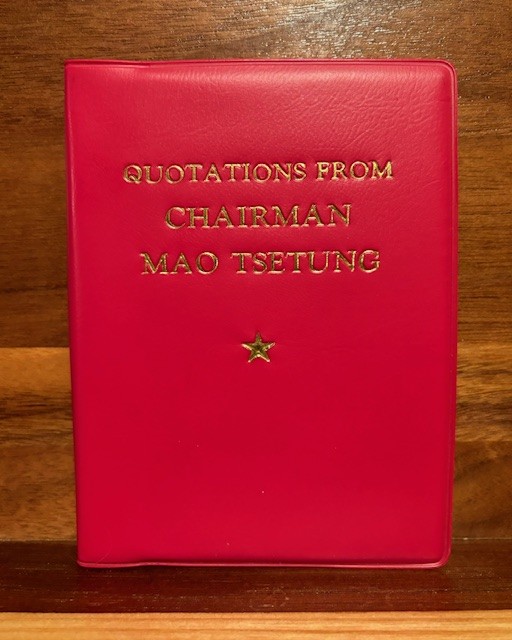
I have “Quotations from Chairman Mao Tsetung” 1972. His huge picture is hanging on the “Gate of Heavenly Peace”, at the north end of Tiananmen Square. In fact, that is the translation of Tiananmen-“Gate of heavenly Peace”. The gate separates Tiananmen Square from the Forbidden City.
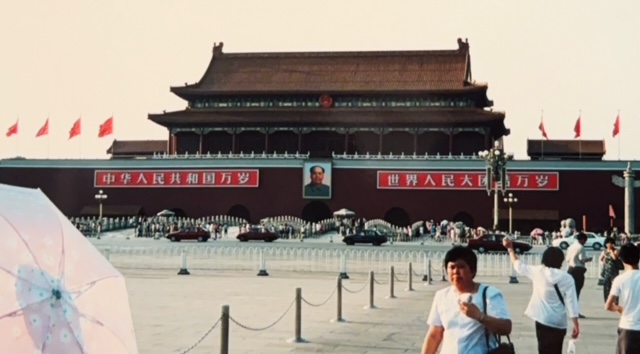
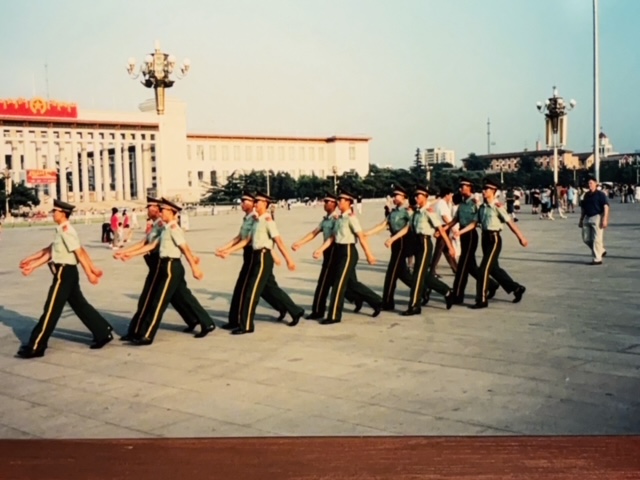
A few years back, I was at Tiananmen Square. One day I was making a little fun of soldiers marching across the square, following behind them. Later that evening we went back to the square. It is very busy in the evening, kids were flying kites, and a lot of chinese families were milling around, enjoying the cooler nights. We went several nights to the square, it was the last place we would visit every day. We enjoyed watching everyone having a good time.
One night, a little later than the other nights, noticed a few soldiers around with the people. Then a few more soldiers appeared, and a few more. Suddenly, there was a line of soldiers across the entire square. They marched together, seemingly to clear out the square. I believe it was 10:00 pm. We watched people all walk past us, and we had a stupid idea. What would the soldiers do when they walked up to a tourist?
We just stood our ground, looking around, when the row of soldiers came up to us. They all walked past us, except for one in front of each of us two. They didn’t say a work, just stopped a foot away and stared at us. After about a lifetime, (maybe five seconds) we backed down and walked the way that all of the other people went when exiting the square. I had quickly lost in that game of chicken. I admit that every now and then, I have been a stupid American tourist.
One must now reserve a pass I am told, and flash their passport to get into Tiananmen Square, or show that they have a ticket to see the Forbidden City.
Thanks for reading.
 Librarytomes