On May 30th, 1930, John G. Shedd Aquarium opened to the public in Chicago. John Graves Shedd rose through the ranks in Marshall Field and Company, from stockboy, to become the president for seventeen years. He felt that Chicago should have a world class aquarium, so he donated $3,000,000 to make that dream become a reality.

I have two of “Guide to the John G Shedd Aquarium” by Walter H. Chute. The first one is the third edition, printed in 1940. The other is the tenth edition, published in 1964. The author tells of the history of Shedd aquarium, along with details of the building, and the equipment; fish tanks, holding tanks, reserve water, filters, heating, cooling, salt water, fresh water. There is then, page after page, of the various fishes in the aquarium, along with wonderful discriptions. The Shedd is an amazing aquarium, detailed by this book.
The architecture first is great. When you first walk into the foyer, look up at the chandeliers, and other decorations. The aquatic designs are everywhere. The six original halls of fishtanks hold 450,000 gallons of water. There are visible 132 tanks for fish. There are then 95 researve tanks used to hold fish when cleaning the visible tanks. Then in the basement, are four reservoirs combined to hold 2,000,000 more gallons of water. The ratio of salt water to fresh water tanks is three to one. Though old (ninety four years), the aquarium is is still beautiful-as are the over 800 species of fish housed within.
The Shedd Aquarium has had several additions. The Oceanarium was opened in 1991 on the lakefront side. The floor to ceiling windows are open to Lake Michigan. The main tank with Beluga whales, is the largest single tank exhibit holding 2,000,000 million gallons of water. There is also a breathtaking jellyfish exibit. The Shedd Aquarium is definitely worth a visit…or two.
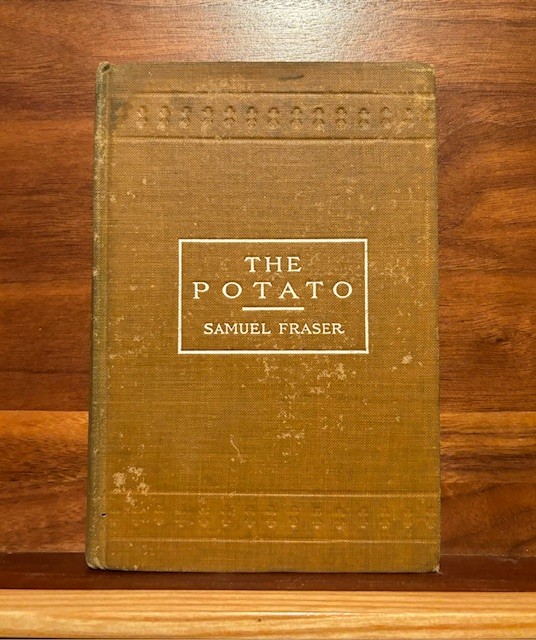
May 30 is also International Potato Day. I have another Orange Judd farming book, “The Potato: A Practical Treatise on the Potato, Its Characteristics, Planting, Cultivation, Harvesting, storing, Marketing, Insects, and deaseases and their Remedies, etc., etc.” by Samual Fraser, 1910. This book will tell you just about everything you need to know about potatoes.
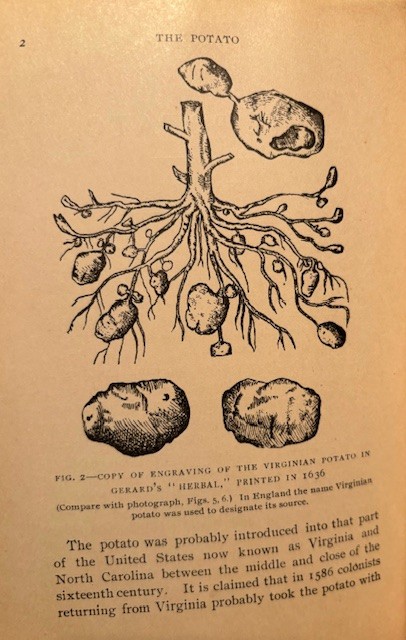
The Potato tuber is a native plant, first grown in Peru, Chili and Mexico. The Spanish brought the plant to Europe.
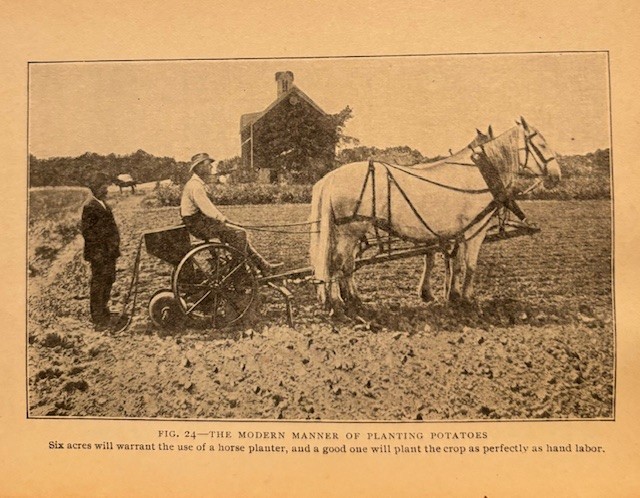
Imagine the ingenuity to plant potato ‘eyes” in fields. This planter is the “Modern Manner of planting.” It would plant potatoes 15 inches apart, in 36 inch rows. That would assure 11,616 plants to an acre. The book “The Potato” is a wonderful read, not just because of history of potatoes, but how they used to grow them, and all of the Farming “tricks of the trade”, back in 1910. One can imagine how tough it was to be a farmer, along with all of the variables to make a successful crop. Much more than just potaoes, this book explains farming very well.
When caregiving for my grandmother, she once talked about picking potato bugs by hand in the field, when she was a child. She would get paid by the can, and would carry a coffee can with a little kerosene in the bottom, which killed the bugs.
I also happen to have the recipe for Potato Soup from Cracker Barrel. It may not be as secret as the spices in Kentucky Fried Chicken, as my wife easily purloined it when she worked at Cracker Barrel years ago. It is a good recipe, and I make it every couple of months. The only change is that I add a few more potatoes, and use an immersion blender some, to help thicken the broth. I also grow some potatos every year in my gardens, just have to rotate where every year.
Tuber, or not tuber. That is the question.
If you think of a Betta pun, please drop me a line.
Thanks for reading.
 Librarytomes