Happy stargazing on April 29, International Astronomy Day. (shouldn’t it be Astronomy Night?) I have several old astronomy books printed with gold on the covers-pictorial boards. Both books are quite striking with the gold, even with their age.
First is “The Expanse of Heaven” by Richard Proctor, published in 1874. The second “Giant Sun and His Family” by Mary Proctor published in 1906. Mary was Richard’s daughter, and also an astronomer. She shared her father’s training and love for stars. Mary wrote several books for young readers, helping their enthusiasm with astronomy.
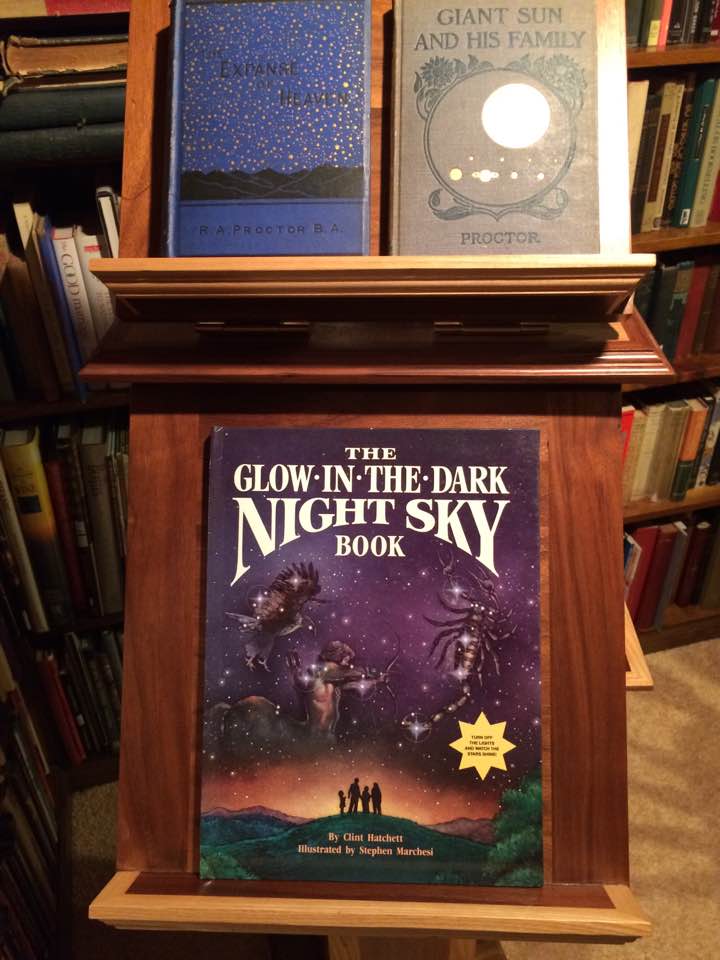
The third book “the Glow in the Dark Night Sky book”, 1988, is another exciting book for kids. It has 30 maps of the night sky-based on different seasons. The maps are on two page spreads. One map shows the constellations as they appear in the sky, along with their names. The second has the same stars glowing, but also with over drawings of the constellations: animals, mythology etc. Both maps will glow in the dark, and can be held up to compare to the night sky. Or if rainy, just a nighttime story, adding a flashlight. All three books are great examples for showing others how to reach for the stars.
April 29th is also International Dance Day. Several books have moonwalked up for discussion. First is “Ballroom Dancing and Deportment” by James Weckler, 1933. The author has given us “A short cut to modern dancing as done by the dancing public, with practical pointers on social conduct incident thereto.” We have lots of shoeprints and numbers for stepping order.
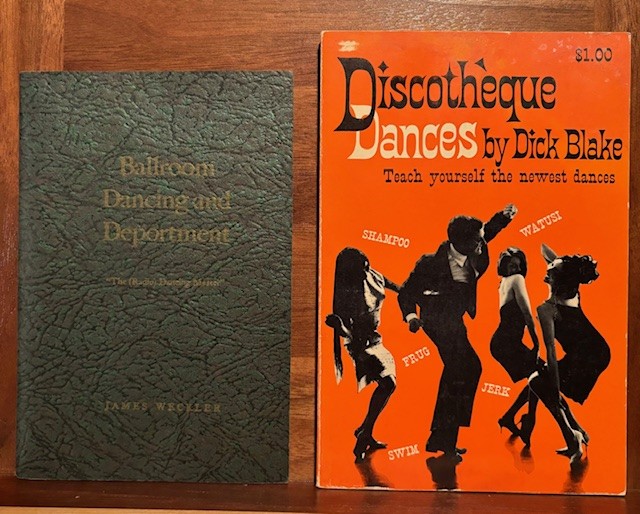
I also have ‘Discothéque Dances” by Dick Blake, published in 1965. There are no shoeprints to follow, but actual photographs. They may be a little cheesy, but hey, we are dancing the Watusi, the Frug, the Chicken, the Mashed Potato, on and on with the newest dances.
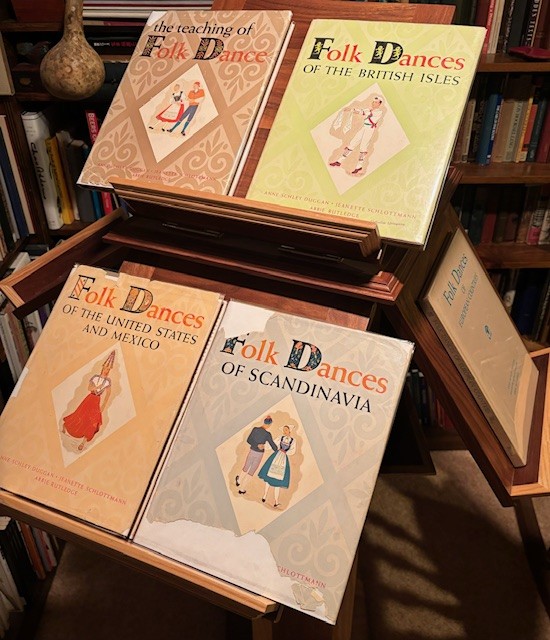
I also have a five volume set of folk dancing. “The Teaching of Folk Dance”, “Folk Dances of the British Isles”, “Folk Dances of the United States and Mexico”, “Folk Dances of Scandinavia”and “Folk Dances of European Countries”, all published in 1948. These are all colorful and entertaining books. There is background information for each country and types of dancing, then directions and tips for dancing, even some party ideas.
What is an owl’s favorite dance? The Hooola.
How do you make a tissue dance? Put a little boogie in it.
Thanks for tip toeing through the library with me.
 Librarytomes