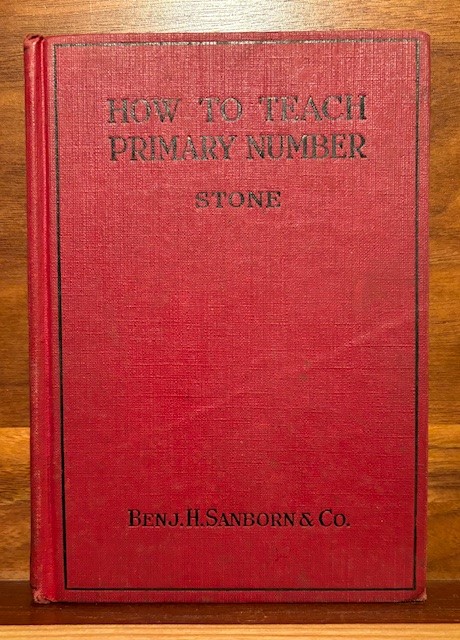
International Day of Mathematics is today-March 14th, and that is just the beginning. While Math Day to most people is only π (3.1415926535897932384626433832795), it can be much more. So we will begin with “How To Teach Primary Numbers” by John C. Stone, published 1923. The secondary title is “A Course of Study and a Manual for Teachers”.
This is a book to help teachers teach first through fourth grade math. The author reminds teachers that “first four years lays the foundation for future work, and a pupil’s progress will depend very largely upon the foundation he gets in those early years.” They he then goes on to “give carefully planned directions on how to treat the three phases of the subject-presentation, drill, and application.” He doesn’t stop there, but provides “well-graded drills that will, if followed, insure proper attention to all facts of each series.” Ouch, drills and testing. Drills and testing. That is why I hated math, and the spare the rod and spoil the child teachings involved.
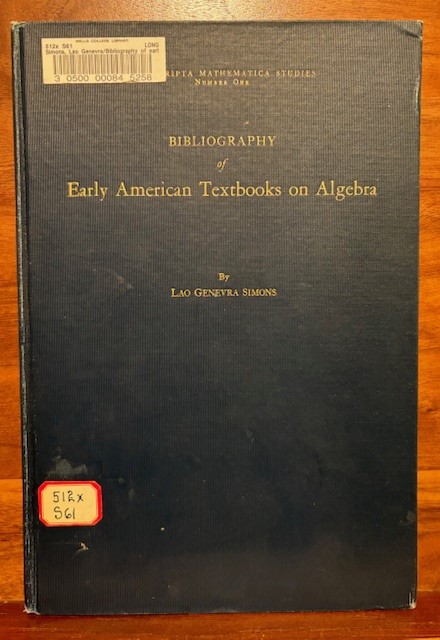
My second book on Mathematics is “Bibliography of Early American Textbooks on Algebra” by Lao Genevra Simons, published 1936. The subtitle is “published in the colonies and the United States through 1850, together with a characterization of the first edition of each work.” Why, you may ask? The author states that:
“There is nothing new under the sun…nearly a hundred years ago Benjamin Peirce in 1837, included fundamental notions of the calculus in his algebra. The chapters on the lever, the inclined plane, the weights of solids in fluids, and on falling bodies will not be considered out of place…The subjects of maxima and minima belongs, according to custom, to the calculus. It is here treated in a manner purely algebraic, and is certainly not less interesting, nor more difficult, than many other subjects found on algebra.” (?)
I don’t understand algebra, never did. However, I do actually get why they collected the old books and analyzed them. What ideas came from England, Germany, France? Where did certain programs come from? They found out the first algebra book by an American author came in 1814.
I have a section in my library, of bibliographies- books about books. They list works, sometimes books and other printed matters, on a specific topic. They would be written by someone specializing on research , or perhaps a collector publishing all of the books on his specific subject. I like these books to review, sometimes I can find unusual books on a specific topic. These were all done long before computers and internet. There is a wide array of unusual topics with some of these bibliographies.
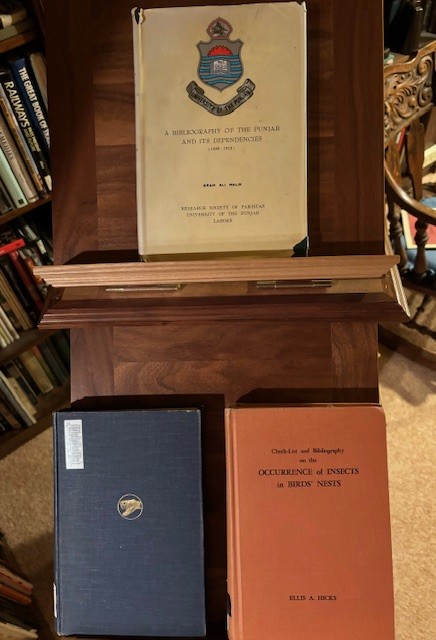
A few other examples I own are “Bibliography of the Punjab and its Dependencies (1848-1910)” by Ikram Ali Malik, 1968; “Bibliography of Animal Venoms” by R.W. Harmon and C.B. Pollard, 1948; and “Checklist and Bibliography on the Occurrence of Insects in Birds’ Nests” by Ellis A. Hicks, 1959. I have a bunch more, several to be promoted later this month.
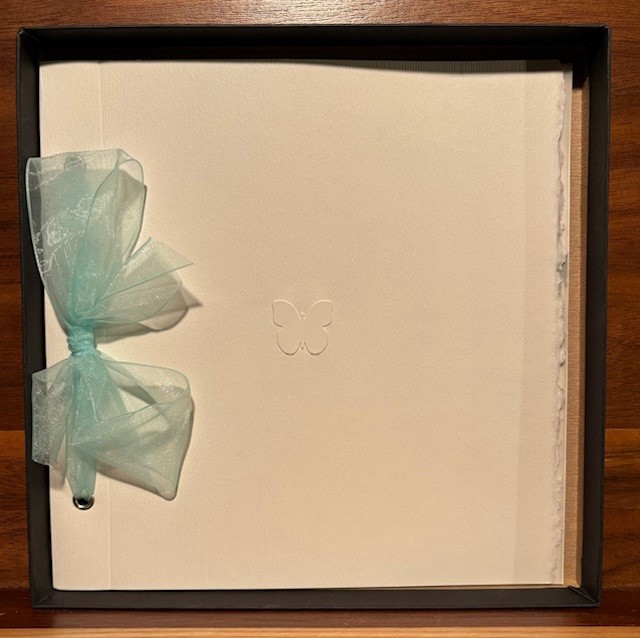
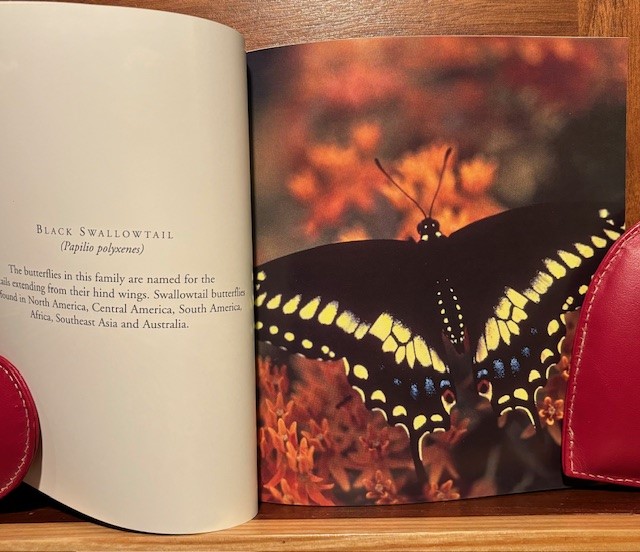
But for today, still March 14, we will finally talk about butterflies. Today is National Learn About Butterflies Day. I have an unusual booklet that I have not seen anywhere else. I believe that is was a gift to the main donors of the Puelicher Butterfly Vivarium at the Milwaukee Museum, perhaps at a ceremonial private opening. The butterfly wing opened in May of 2000.
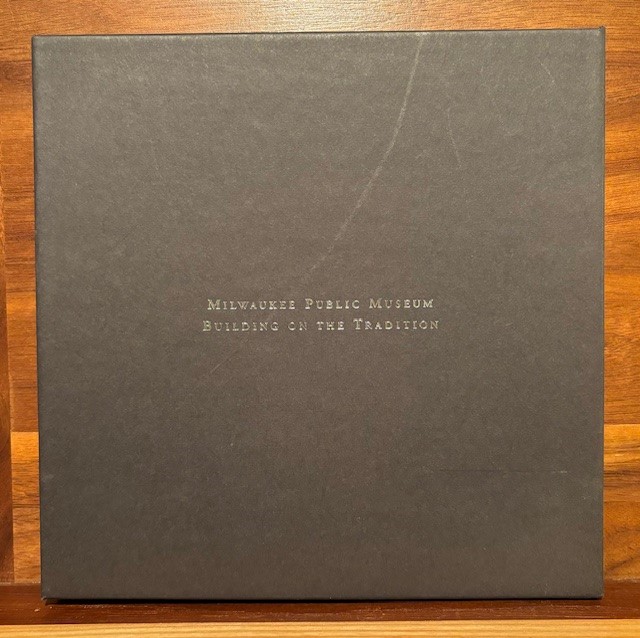
This is a small box, just over seven inches square, and 3/4 inch deep. Inside is a white booklet with an embossed butterfly on it; the pages held together by a ribbon. There are several very nice photographs of butterflies and chrysalids, along with the detailed building size and particulars of butterfly examples, and ending with the names of donors that helped put this together. I have no idea what is is worth, but I spent a whopping $1 for it. It is a beautiful and treasured book though, in the library.
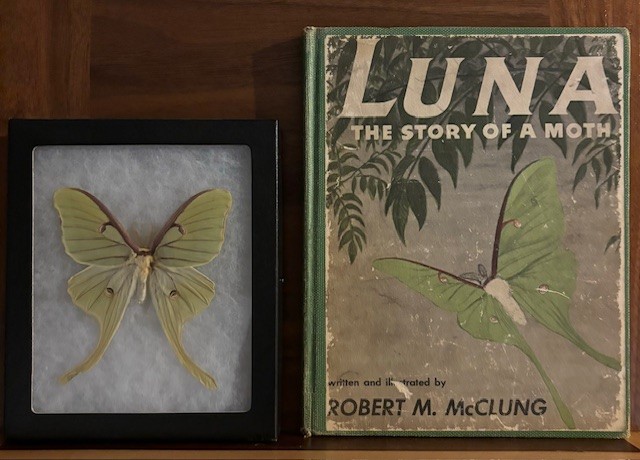
Finally, I have a mounted Luna moth, encased in a box. This is a full-size moth, over four inches tall, that was recently given to me by a dear smiling friend. Next to it, is the book “Luna, The Story of a Moth” by Robert M. McClung, 1957.
In fifth grade, I found a fat green caterpillar, and kept it, fed it, in a bird cage until it made a cocoon. I spent time at the library reading and learning about it. Several weeks later, it immerged into a beautiful yellow/green Luna moth. It was the largest moth/butterfly I had ever seen. I then set it free.
Speeding up to just a few years ago, I was with friends and family renting a home in Door county, right on the shore of Lake Michigan. We were on the beach one evening, sitting in chairs around a fire, when I saw a Luna moth fluttering around a light up at the house. I pointed it out to the group, and they began a debate if in fact that was a bat. I laughed at them all, and went up to the house and gently caught the beautiful moth, cradled it in my shirt, and went back to the crowd. I talked about raising my Luna moth in grade school, and a few other facts about moths.
I then proudly released the moth, in front of everyone. I was so happy of what I knew about Luna moths, and that this was not a bat. The moth fluttered up about three feet, and then flew directly into the fire, instantly flaming into nothing. I was speechless. Everyone was speechless. In my feeble attempt to teach others about this wonderful Luna moth, I had sent it into the fire. The rest of the night for me was quite sad. Others were able to later laugh that evening, not at the demise of the Luna moth, but at how hard I had taken my part in his death.
Perhaps today should be the International Day of Moth-matics. Thanks for reading.
 Librarytomes