Today, on March 10th, 1906, in northern France, there was a mine fire and explosion. This catastrophe was known as the Courrieres mine disaster, with over 1099 people killed. In remembrance of those casualties, I am presenting some books I have on mining. The first is “A Text-book on Coal Mining”, by Herbert W. Hughes, 1904. This is a wonderful handbook on mining, showing the details involved. The engineering for commercially working coal deposits are incredible. The technical problems are staggering. This is a marvelous book.
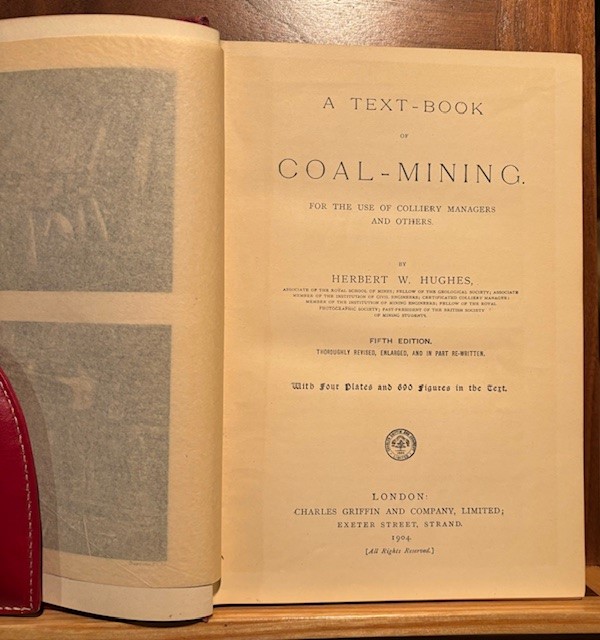
This book has numerous photographs, as well as many illustrations of supports, machinery, and mine diagrams, all that help one understand the workings of a mine

The next book is “Shaft Sinking in Difficult Cases” by J. Rimer, 1907. This is a deeply involved book about digging shafts, and keeping water out, along with other serious issues. This book is way above my paygrade of understanding, but I enjoy that it has 19 unbelievable plates that are folded and tipped in. Some are over 3 feet long. The detail of these illustrations of mine shafts, and support systems, etc. are just incredible. While it is relatively easy to get a reprint of the wording of this book, it is much tougher to find the original with the attached diagrams.


The next book is ” Mine Sampling and Valuing” by C.S. Herzig, published 1914. This is a little more understandable to me (little). The book explains how to take samples, and sampling processes, to value and estimate whether an area may be profitable to work. There is a science, along with the ‘hunches’ involved with profitability of mining.

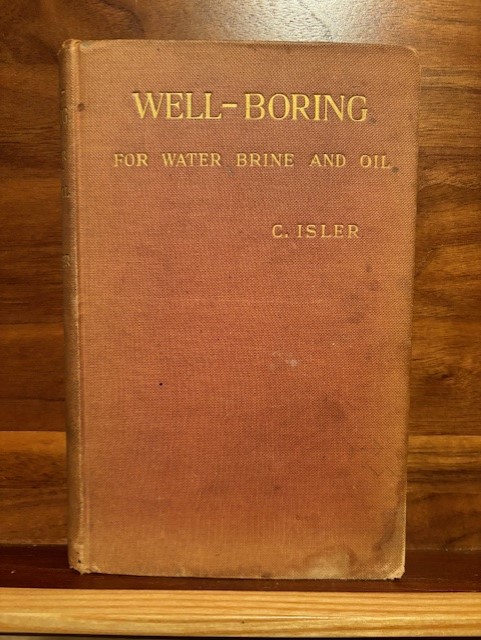
This book “Well-boring for Water Brine and Oil” by C. Isler, published in 1902, is a little easier to find, and perhaps also to understand. It is involved with deeper mine shafts, and the engineering involved. There again, it is a science to be able to create and use equipment for deep-well boring.
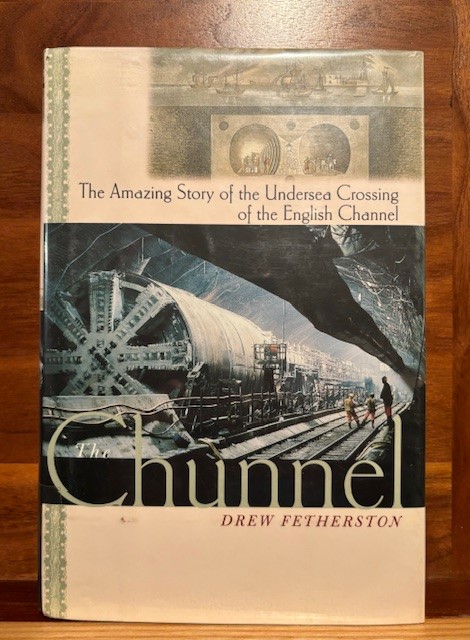
This leads me to my last book today on tunnels, “the Chunnel, an Amazing Story of the Undersea Crossing of the English Channel” by Drew Fetherston, 1997. This is a wonderful story about tunnel building. Can you really imagine an underground, (Not just underground but under the English Channel!) tunnel 31 miles long that connects England and France. One has to read this book. It explains not only the amazing engineering involved, but also the financing and business decisions that were involved.
There are amazing things done underground. The engineering involved is unbelievable. It is fun to read some of these books, because of the “I didn’t know that” lightbulb goes off. There are incredible things going on, and then to read of such things, and how they overcame challenges over a hundred years ago, just amazes me.
But more incredible is the story of the people who are involved. Like for example, in the mine disaster I opened with, it was not the designers, or the engineers that all perished that day, it was hardworking people just working their dangerous job. It is easy to forget, so let’s mark on our calendar, December 6th, which is National Miner’s Day (and of course, mark Labor Day this year, too). I will pay tribute to them-the workers, and Also Mother Jones, their dedicated main supporter. She was considered the “Mother of Labor Day”. Her story will be told as well. I have some books…
Keep reading.
 Librarytomes