Today is National Cordova Ice Worm Day. This begins a weeklong festival on Cordova, Alaska. According to the United States Geological Survey (USGS):
Do ice worms exist?
“Yes, ice worms do, in fact, exist! They are small worms that live in glacial ice in Alaska, Washington, Oregon, and British Columbia; they have not been found in glaciers elsewhere. Contrary to stories and songs, they do not give glacier ice its blue color and they don’t grow to lengths of 50 feet. These myths were made popular by poet Robert Service and the annual Cordova Iceworm Festival in Alaska.
Ice worms belong to the genus Mesenchytraeus, the same genus as earthworms. Ice worms are the only annelid worms known to spend their entire lives on glacier ice. Ice worms can be up to an inch long, and can be black or blue in color. The ice worms come to the surface of the glaciers in the evening and morning to feed on snow algae.”
As for how I knew about Ice Worms, it is because I was a Boy Scout. Our troop had several winter activities. We would do a winter camping trip, called ‘Polar Bear camping”, and we had a yearly ‘Klondike Derby’ where we would make a dogsled, pulled by us, and complete a trail, with various stops for skill challenges along the way. At campfires in the evening, our Scoutmaster would have someone read a poem from Robert Service. He was a wonderful poet that wrote of life in Alaska during gold rush, and trappers. It was a hard cold life.
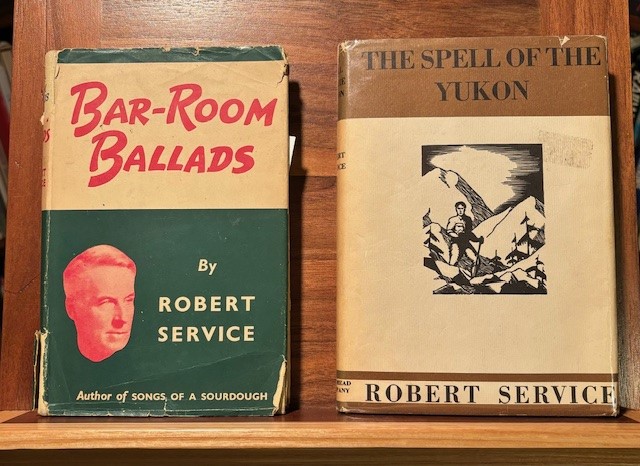
One poem from “Bar-room Ballads” (1949) was “The Ballad of the Ice-worm Cocktail” where an English tenderfoot was challenged to drink a shot with an Ice-worm in it. Anyone who completed the drink would become a ‘true Sourdough’ a hardened Alaskan. Another often read poem, was from his book “The Spell of the Yukon” (1984). It was the “Cremation of Sam MaGee.” The first stanza went:
There are strange things done in the midnight sun
By the men who moil for gold;
The Arctic trails have their secret tales
That would make your blood run cold;
The Northern Lights have seen queer sights,
But the queerest they ever did see
Was that night on the marge of Lake Lebarge
I cremated Sam McGee.
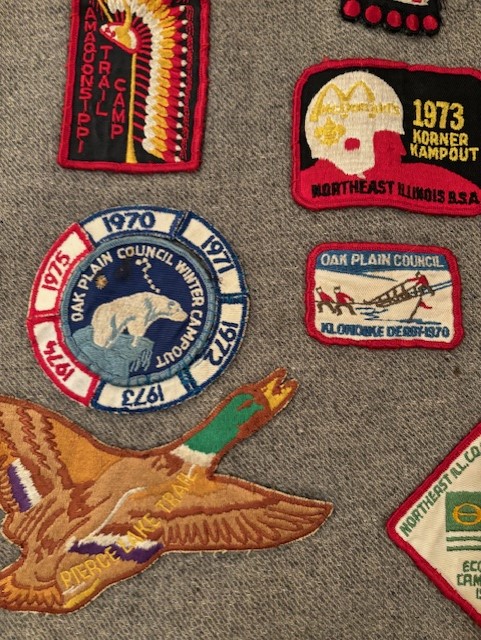
We really liked this poem more, because one it had a better sing-songy rhythm to it, rather like an adult Dr. Seuss. It also reminded us we are cold, and tent camping in snow. (though as a Patrol Leader, I was able to-physically not legally-sneak a little peppermint schnapps into my hot chocolate. I still have my wool blanket, that I would wrap around my sleeping bag. Sewn on to it are all of the patches I acquired in Boy Scouts. Notice the Klondike Derby patch along with Winter Campout patches.
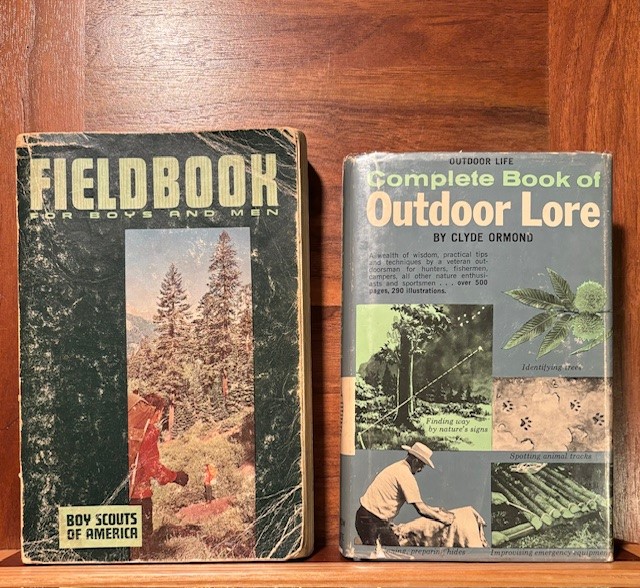
I also still have my “Field Book” from Scouting, along with my dad’s book “Complete Book of Outdoor Lore” by Clyde Ormond, 1964. I still have these to read when in my RV (a little more comfortable than winter camping on frozen ground in a tent.)
It can be cold outside. But properly dressed and being prepared, can help you to live a more adventurous life. The first time I saw the Northern Lights was during a winter ‘Polar Bear’ camping trip. There I learned how to handle breaking through ice. Fifty years later while 4-wheeling through the Chain O’lakes, I was walking about 1/2 mile from shore and fell through that ice. Boy Scout training helped me to stay calm, which allowed me to remember my broken ice recovery. I got myself out pretty quick. It still took us a while to get to shore, and to a warm place but I am here to write about it. So keep reading, it may keep you warm, perhaps even save your life.
 Librarytomes